A clean house and a fly problem aren’t a contradiction. Flies don’t need a mess — they need a breeding source, and that source is usually hidden: a drain, a forgotten onion, a dead animal in the chimney, or cluster flies coming out of the walls. This article covers what actually draws flies into a tidy Cleveland home and what stops them. The short version: surface cleaning isn’t the same as removing a breeding site.
Why Do Flies Invade Clean Homes in Cleveland?
A spotless counter doesn’t mean there’s nothing to breed in. Flies are drawn by scents and moisture you can’t see, and they slip in through open doors, gaps, and torn screens. In most clean-home fly calls we run on the west side, the culprit isn’t dirt — it’s one hidden source the homeowner hasn’t found yet. Warm Cleveland summers make it worse, speeding up breeding so a couple of flies become a crowd in a week or two.
Where Clean Homes Hide Fly Breeding Sources
This is the part most articles miss. Even an immaculate home can hold a breeding site:
- Drains: drain flies and dark-eyed fruit flies breed on the gelatinous film inside drainpipes — invisible unless you scrub it out.
- Forgotten produce: a single onion or potato lost in a cabinet, or fruit that rolled out of sight, feeds a fruit fly outbreak.
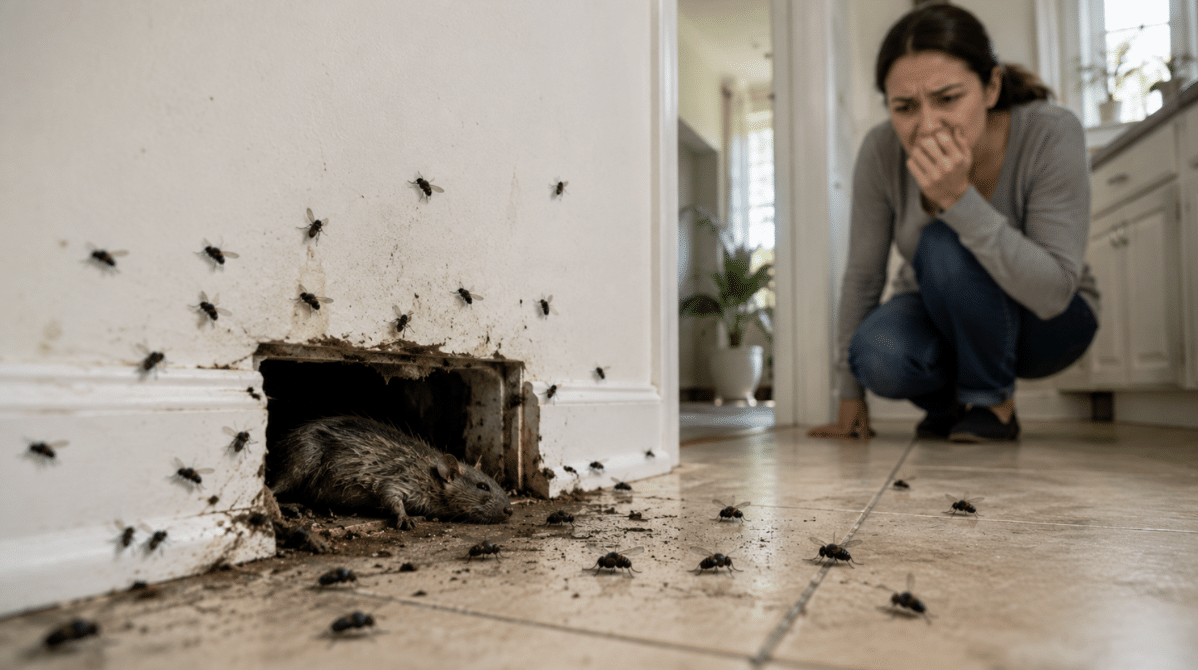
- A dead animal: a bird or squirrel in the chimney, or a mouse in a wall void, breeds blow flies and house flies no matter how clean the kitchen is.
- Houseplants: overwatered potting soil breeds fungus gnats.
- Cluster flies: in fall and on warm winter days, these “attic flies” emerge from wall and attic voids and gather at windows — nothing to do with your housekeeping.
Find the source and the flies end. That’s the whole job.
How House Flies Find Food You Can’t See
House flies have a sharp sense of smell and can pick up faint traces of organic material — a film of grease, a spill that dried, residue in a disposal — from across a room. That’s why “clean” is relative when it comes to fly control: a wiped surface can still carry enough scent to draw them. The fix isn’t more air freshener; it’s finding and removing whatever they’re keying in on.
What Role Do Humidity and Moisture Play?
Flies need moisture to breed, so damp spots matter as much as food. Leaky pipes, condensation, overwatered plants, and humid kitchens and bathrooms all give larvae what they need. Fixing leaks, running a fan or dehumidifier in damp areas, and not overwatering plants takes away half the equation.
How Light and Entry Points Let Flies Indoors
Even with no breeding source inside, flies wander in from outside, and light pulls them toward the house. Bright porch and window lighting at dusk draws them to the door, and every time it opens, a few slip through. Damaged screens, gaps under doors, and unsealed windows do the rest. Switching exterior bulbs to warmer, less attractive lighting, keeping screens intact, and sealing gaps cuts down the steady trickle that wanders in even when nothing indoors is feeding them.
The Fly Lifecycle and Why a Small Problem Explodes
A house fly goes from egg to adult in as little as 7 to 10 days, through four stages — egg, larva (maggot), pupa, adult. Eggs and larvae develop down in the breeding source, where sprays don’t reach, and pupae are tough enough to ride out conditions that kill adults. That’s why killing the flies you see never ends it: the next batch is already maturing out of sight. Control means hitting the source, not the air.
Signs of a Fly Problem in a Clean Home
Watch for a few things:
- More flies than usual around one area, often the kitchen or a window.
- Maggots in a drain, the bottom of a trash can, or a plant’s soil — that’s a breeding site, not a stray fly.
- A faint odor you can’t place, which can mean decaying matter or a dead animal nearby.
Spot these early and you deal with a small issue instead of an established one.
Practical Fly Control for Clean Homes
Most of this is about denying flies a place to breed:
- Clean drains: scrub or treat them; the biofilm inside is a common hidden nursery.
- Find the source: track down the forgotten produce, the overwatered plant, or the damp spot.
- Seal and screen: close gaps around doors and windows and repair torn screens.
- Manage moisture and trash: fix leaks, keep lids tight, empty garbage regularly.
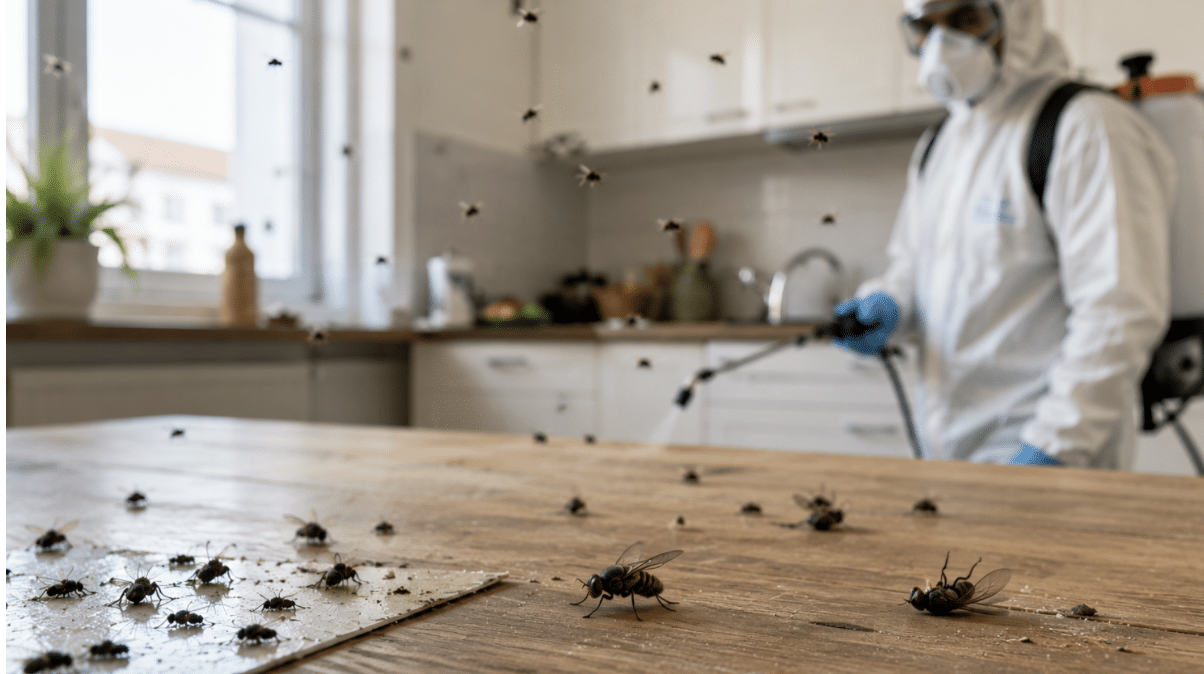
- Use traps to monitor: sticky traps and insect light traps show you where flies concentrate, which points to the source.
Skip the essential-oil and peppermint “repellent” sprays — they don’t touch a breeding problem and won’t end an infestation.
When to Call a Professional in Cleveland
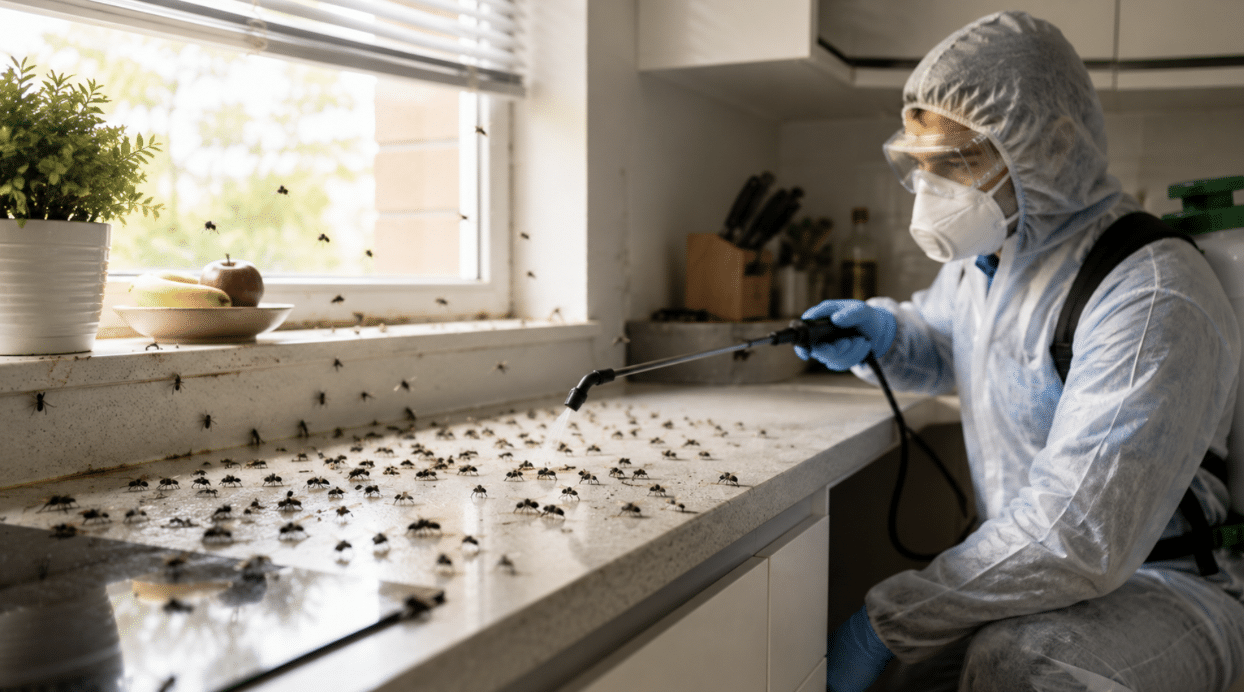
Call pest management when flies keep coming back after you’ve cleaned, when you find maggots, or when there’s an odor you can’t locate. We inspect to find the breeding site you haven’t — a drain, a hidden carcass, a larval source out of sight — and treat it directly. We’ll also tell you when the real fix is a plumber (a broken sewer line breeds phorid flies) or a chimney pro (a dead animal), so you’re not paying to spray a problem that needs a repair.
How Lakewood Exterminating Handles Clean-Home Fly Problems
We’re a locally owned Cleveland west-side company, and “my house is clean and I still have flies” is one of the most common calls we get. Our Small Fly Service (drain/fruit flies, fungus gnats) and Filth/Large Fly Service (house, blow, bottle flies) both start from $200 plus tax, with half-price follow-ups within 60 days. Because fly problems come down to sanitation and the source, we don’t warranty fly work — but we’ll show you exactly what’s feeding them so it doesn’t come back. You can request a quote or learn more about our comprehensive pest control services.
Frequently Asked Questions
What’s the most effective way to keep flies out of a clean house?
Deny them a breeding site. Clean drains, track down forgotten produce, fix damp spots, seal gaps and screens, and keep trash sealed. Surface cleaning helps, but the source is what matters.
Do scented sprays and essential oils repel flies?
Not in any way that ends an infestation. A strong scent might briefly mask attractants, but flies breed in a source, not on a smell — remove the source and you don’t need the spray.
How does humidity affect flies indoors?
Flies need moisture to breed, so leaks, condensation, and humid rooms raise your risk. Dehumidifiers, fixed leaks, and good ventilation make the home far less hospitable.
What common mistakes let flies into a clean home?
The usual ones are hidden: crumbs under appliances, residue in a garbage disposal, an overwatered plant, or trash that isn’t sealed. Leaving windows open without intact screens is another. The fix is checking the spots you don’t normally clean, not just the visible surfaces.
How do I tell house flies from other species?
House flies are about 1/8 to 1/4 inch, gray, with four dark stripes on the thorax. Fruit flies are smaller and tan with red or dark eyes. Which one you have points to where it’s breeding — large flies to garbage or a carcass, small flies to drains or produce.
When should I call pest control?
When flies keep returning despite cleaning, when you find maggots, or when health and sanitation are a concern. A recurring problem almost always means a breeding source you haven’t found — which is exactly what an inspection locates.
Conclusion
A clean home with flies just means the source is hidden, not absent — a drain, a forgotten onion, a dead animal in the chimney, or cluster flies in the walls. Find and remove it and the flies go too. We track down what’s feeding them and treat it directly instead of fogging the room. For clean-home fly problems on the west side, reach out to Lakewood Exterminating.