Paying for fly treatment and still seeing flies is one of the more frustrating calls we get. Most of the time it isn’t that the treatment failed — it’s that the breeding source was never removed, so a fresh batch of flies keeps maturing. This article covers why flies come back, what professional treatment can and can’t do, and how to keep them gone. We’ll also cover when to call Lakewood Exterminating for a follow-up.
What Is the Fly Life Cycle, and Why Does It Matter Here?
A fly runs through four stages — egg, larva, pupa, adult — and can complete the whole cycle in as little as 7 to 10 days. The eggs and larvae develop down in the breeding source, where sprays and traps don’t reach. So if that source is still there after treatment, the adults you killed are simply replaced within a week or two. This is the single biggest reason flies “come back.”
Why Killing Adult Flies Isn’t Enough
Treatment that targets the flies in the air gives you a knockdown, not a cure. The maggots in the drain, the soil, or the carcass keep developing on their own schedule. Real control means removing or treating that source — once it’s gone, the existing adults die off and nothing takes their place. Effective fly control works from the source out, not the air in.
Common Reasons Fly Treatment Fails in Cleveland Homes
When flies persist, it’s almost always one of a handful of things — and most aren’t about the treatment itself.
The Breeding Source Was Never Removed
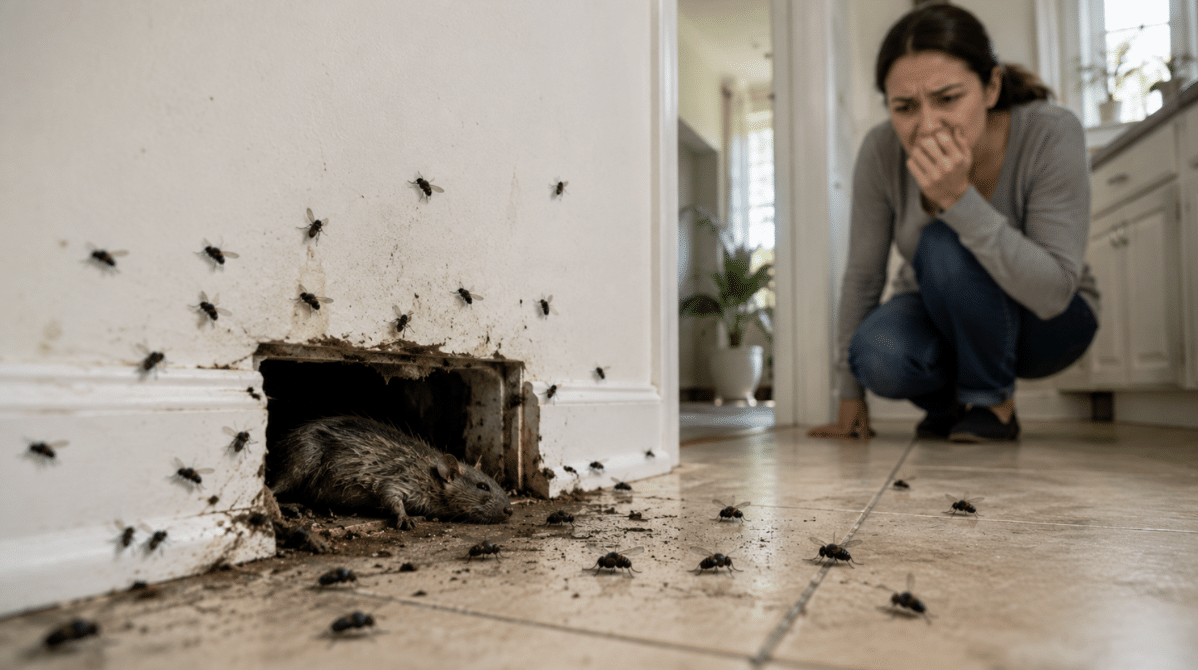
This is the usual one. If a dead animal is still in the chimney or wall, a drain is still coated in biofilm, or produce is rotting out of sight, no treatment keeps up with a 7-to-10-day generation. The fix is finding and removing the source, not retreating the symptoms.
It’s a Different Fly Than You Think
Cluster flies — the sluggish “attic flies” — overwinter inside walls and attics and trickle out at windows for weeks on warm days. They aren’t breeding in your home, so kitchen-style fly treatment won’t stop them; sealing the exterior is what works. Phorid flies are the other trap: they come from a broken sewer line and breed in the contaminated soil around the leak. Until a plumber repairs the pipe, no amount of treatment will end them — which is why we don’t service phorid flies without that repair first.
Sanitation and Moisture Weren’t Addressed
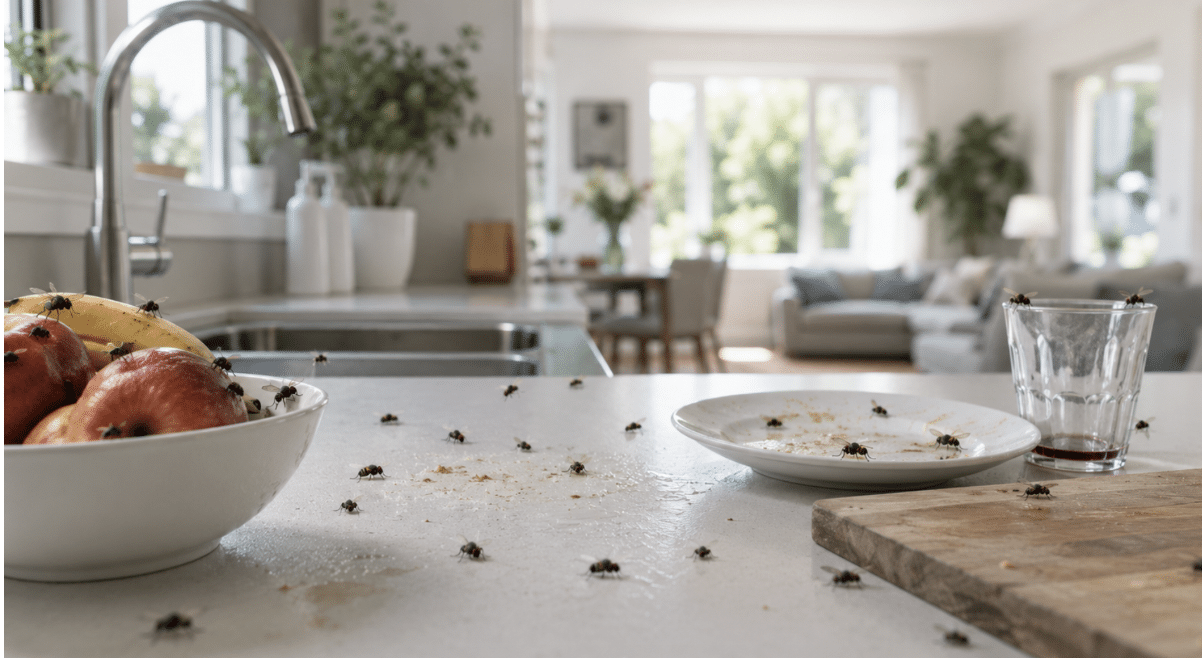
Treatment buys time, but standing food waste, unsealed trash, damp basements, and leaks rebuild the conditions flies need. If those don’t change, the relief is temporary.
How Professional Treatment Works — and Its Limits
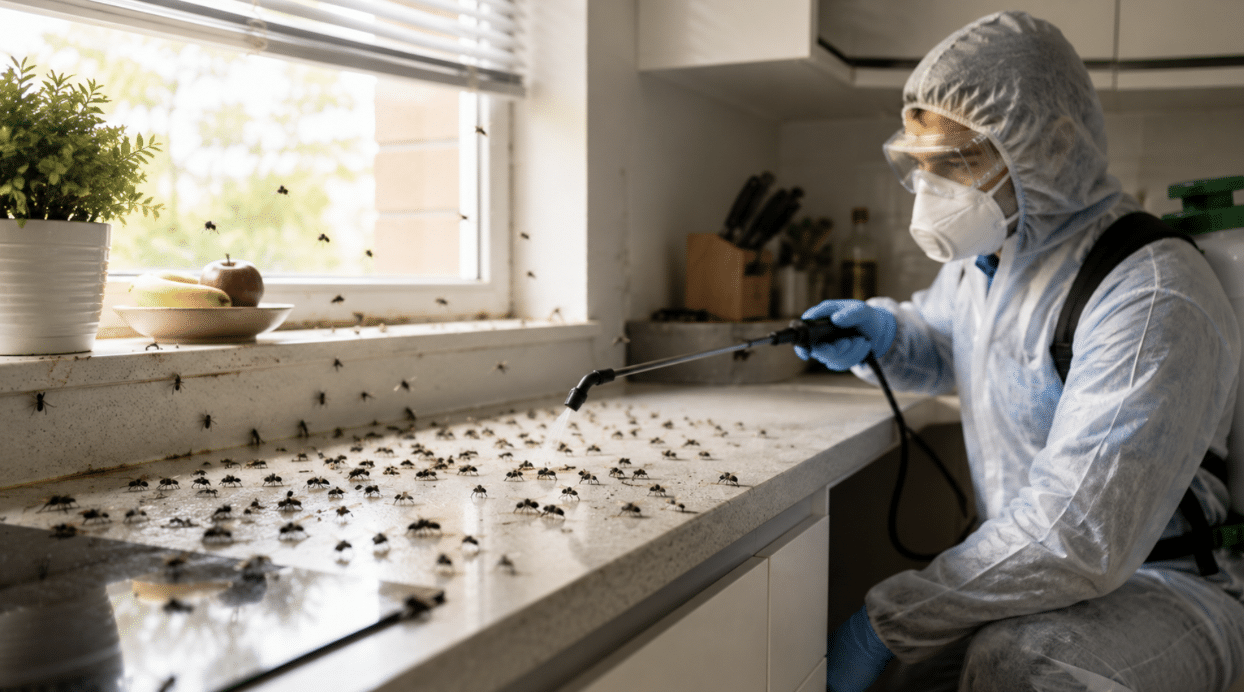
Good fly work combines inspection, source treatment, baiting, and prevention, not just spraying. We bait the areas where adults rest and feed, treat drains and larval sources directly, and give you sanitation recommendations. The limits are real: we can’t warranty against a source we can’t reach, like a carcass in a wall, or a problem that needs another trade, like a plumber for a sewer line. Being straight about that is part of the job.
How to Prevent Flies From Coming Back
A treatment holds when the conditions behind it change.
Maintenance Steps That Actually Hold
- Remove the source: the dead animal, the drain biofilm, the forgotten produce — whatever was feeding them.
- Control moisture: fix leaks, run a dehumidifier in damp areas, don’t overwater plants.
- Stay on sanitation: tight trash lids, regular garbage removal, sealed food, daily pet-waste pickup.
- Seal the exterior: cap the chimney and close gaps, especially against overwintering cluster flies.
Do these and a single treatment usually holds. Skip them and you’ll be retreating. You can request a quote to talk through your specific situation.
When to Call Lakewood Exterminating for Follow-Up
If new fly activity shows up, or your own prevention isn’t holding, get in touch. We’ll re-inspect, find what’s feeding the problem, and adjust.
Our Follow-Up Policy — Straight Talk
Here’s the honest version: because fly infestations are a sanitation and source problem, we don’t warranty fly treatments. What we do offer is half-price follow-up visits within 60 days of the initial service, and a clear explanation of exactly what’s driving the flies so you can shut it down. Our fly services start from $200 plus tax.
Frequently Asked Questions
What fly species are common in Cleveland homes?
House flies (decaying matter and garbage), fruit and drain flies (produce and drain biofilm), and cluster flies (overwintering in walls, emerging in cooler months). Knowing which you have points straight to the source and the right fix.
How often should I schedule professional fly treatment?
Fly work is usually problem-driven, not on a fixed calendar — you treat when there’s an active source, then prevent. Quarterly general pest service helps, but recurring flies specifically mean a source to find, not just a standing appointment.
Do natural remedies control flies?
A cider-vinegar trap can help with fruit flies, and cleanliness always helps. But essential-oil “repellents” don’t end an infestation — they don’t touch the larvae in the source. Removing the breeding site is the only thing that does.
What signs mean I still have an infestation?
Flies returning in the same area, maggots in a drain or trash, or an odor you can’t place. Those point to a live breeding source, not a few stragglers.
How does weather affect persistent flies?
Warm, humid weather speeds breeding, so summer is peak season for filth flies. Cooler months bring cluster flies indoors from the walls. Each calls for a different response, which is why identifying the fly matters.
Conclusion
Flies after treatment almost always mean the source is still there — a carcass in the chimney, biofilm in a drain, or a sewer line that needs a plumber. Treatment knocks down adults; removing the source is what ends it. We’ll find what’s feeding the problem and treat it directly, and we’re upfront that fly work isn’t warrantied because it lives and dies on the source. If they keep coming back, reach out to Lakewood Exterminating.