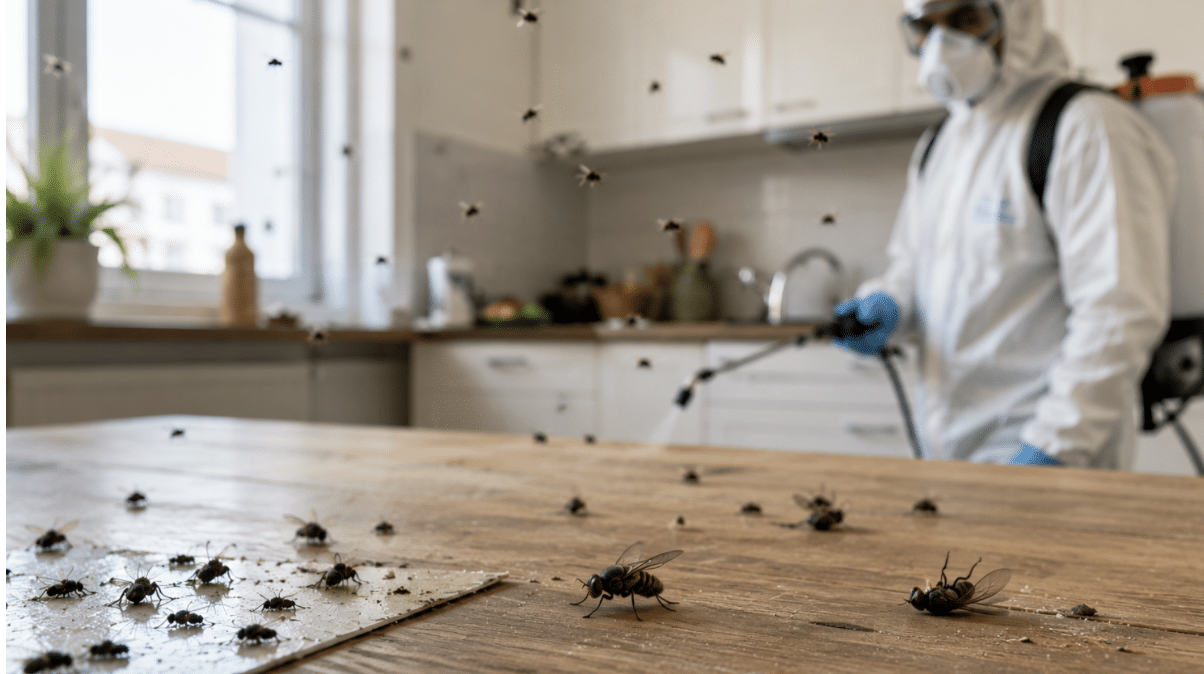
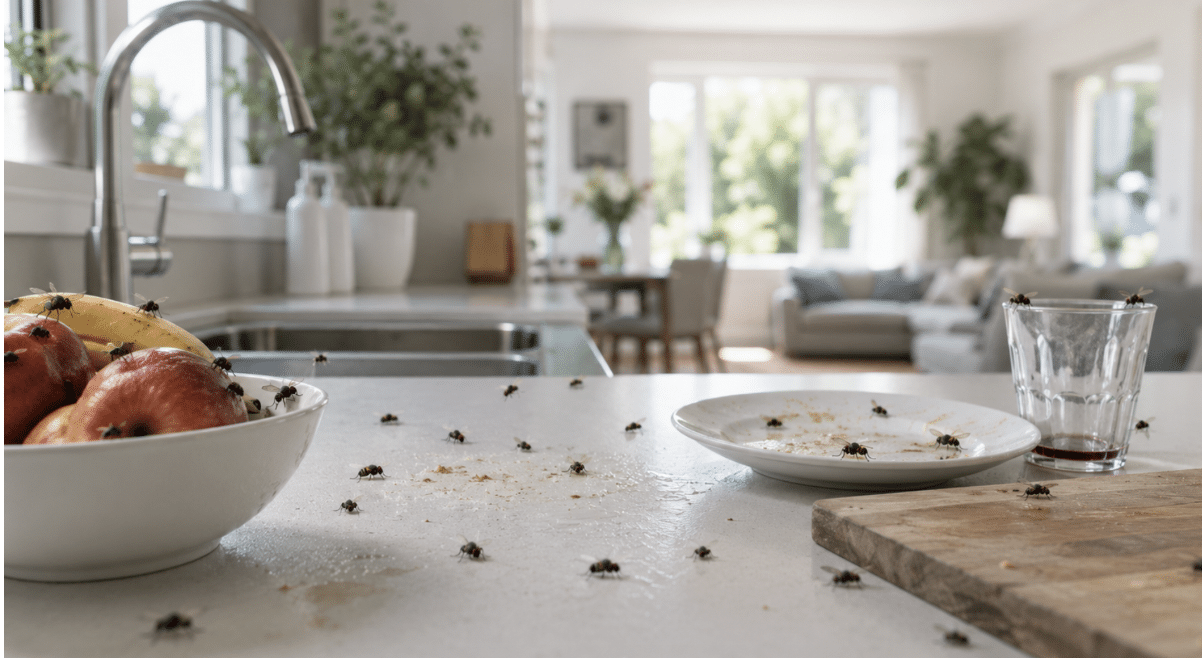
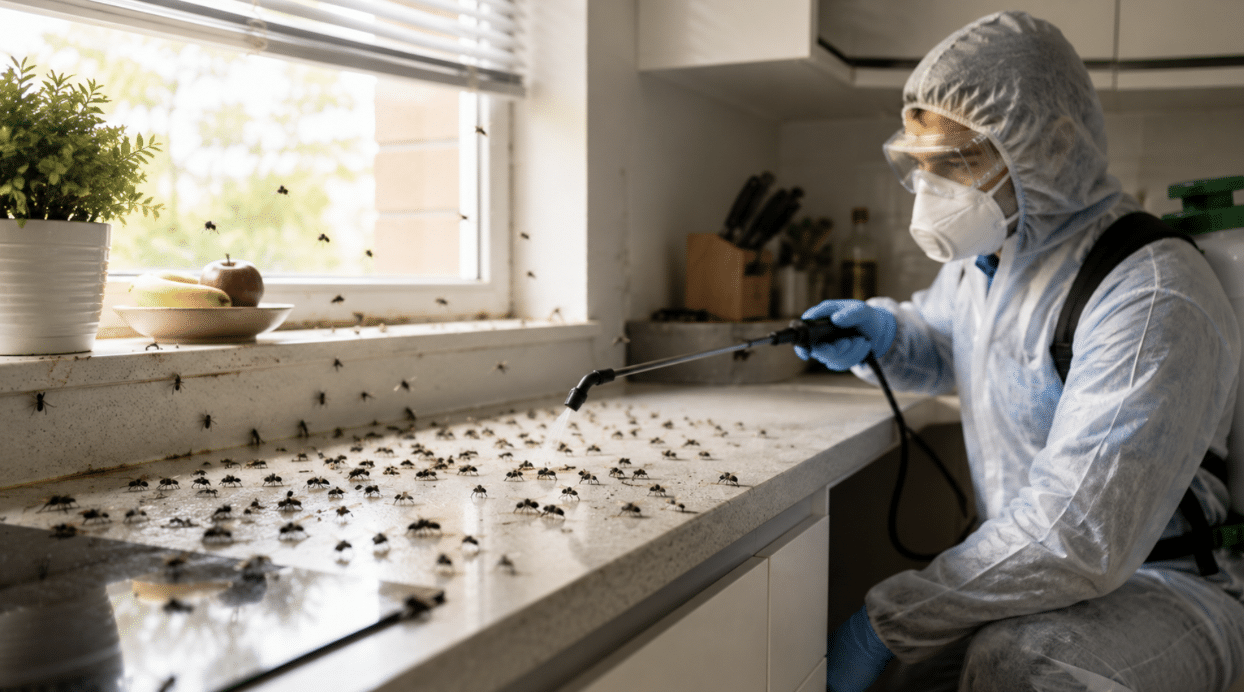
When a swarm of flies shows up indoors with no garbage in sight, the cause is usually something dead where you can’t see it: a bird in the chimney, a mouse in a wall, a squirrel in the attic. The carcass becomes a breeding factory, and the flies are the symptom. This guide covers how to spot the signs, where these animals usually end up, and how we handle the fly side of the problem. If you need a Fly Exterminator in Cleveland, we deal with this constantly on the west side.
What Are the Common Signs of a Dead Animal Causing Fly Infestations Indoors?
Two signs travel together: a foul odor and a sudden burst of flies in one part of the house. The smell is the decomposition; the flies are blow flies and house flies that have found the carcass and started breeding on it. Catch it early and you keep a one-room nuisance from becoming a month-long problem.
How to Recognize Odors Indicating a Dead Rodent or Animal Decomposition
The smell is distinct, fetid and rancid, like spoiled meat, and it’s strongest right at the source, so it helps you narrow down where the animal is. It tends to rise and fall with the temperature; warm afternoons make it worse. When that odor shows up alongside more flies than usual, you’ve almost certainly got a carcass somewhere in the structure.
Which Fly Species Signal the Presence of Dead Animals in Your Home?
Blow flies are the tell. They’re the metallic blue or green flies, a touch bigger than a house fly, and they breed on decaying meat, including carcasses. If you’re seeing them indoors in a swarm, something has died nearby, often in an attic or a wall void. Flesh flies do the same. Blow flies are usually the first insects on a carcass, and the eggs they lay can hatch within a few hours to a few days, depending on the species. That’s why the population climbs so fast once it starts. Under warm conditions the whole cycle, egg to adult, can be as short as 7 days.
Where Are Dead Animals Most Likely Located in Residential Spaces?
Animals die where they shelter, out of sight and out of reach. On the west side, the most common spot is the chimney: a bird or squirrel gets in through an uncapped flue and can’t get back out. After that, it’s attics, wall voids, and crawl spaces.
Why Are the Chimney, Attics, and Crawl Spaces Common Sites?
These spaces are quiet, sheltered, and rarely disturbed, which is exactly what an animal looks for. An uncapped chimney is the classic trap: easy to fall into, impossible to climb out of. Attics and crawl spaces draw animals in from the cold, and once one is sick or stuck, it dies there and decay starts. A capped chimney and a sealed roofline prevent most of this.
How Do Walls and Hidden Areas Contribute to Odor and Fly Problems?
A mouse or rat that dies inside a wall void is the hardest case. You can’t reach it, and sometimes you can’t even pinpoint it without opening drywall. The smell seeps into the living space and the flies emerge through outlets, baseboards, and any small gap. This is where an inspection earns its keep: we trace the fly activity back to the void so you’re not tearing open the wrong wall.
What Health Risks Are Associated With Fly Infestations Linked to Dead Animals?
Flies that breed on a carcass move between that carcass and your kitchen surfaces, and they can carry bacteria along the way. That’s the real reason to deal with them promptly. Not panic, just basic sanitation. Keep food covered and surfaces wiped down until the source is gone.
Do Flies From a Carcass Pose a Real Sanitation Concern?
Yes. Filth flies are known to carry disease-causing bacteria from decaying matter to the places people eat and prepare food. You don’t need to overthink the specifics; the takeaway is simple. Find and remove the source, clean the surfaces flies have touched, and the health concern goes with them.
How Can Professional Fly Control Help With Dead-Animal Fly Problems?
Here’s the honest division of labor. Removing the carcass itself, pulling a dead squirrel out of a chimney or opening a wall, is a job for a chimney sweep or wildlife company. What we do is the fly side: inspect to locate the larval sources, knock down the adult population, and treat the resting and feeding areas so the infestation ends instead of dragging on.
What Does Our Inspection and Treatment Actually Involve?
We start by tracing the flies back to where they’re breeding, because killing the adults you see does nothing about the maggots still developing. From there it’s interior fly-bait application to windows, lights, garbage areas, and other resting spots, plus sanitation recommendations specific to your home. If the source is an animal we can’t safely reach, we’ll tell you straight and point you to the right pro to remove it. Carcass removal and cleaning are not part of the fly visit.
How Does Lakewood Exterminating Approach Fly Control in Cleveland?
We’re a locally owned, Cleveland west-side pest control company, so we see dead-animal fly calls regularly, especially in older homes with open chimneys. Our Filth/Large Fly Service starts from $200 plus tax, with half-price follow-ups within 60 days. One honest note: because these problems are driven by the source and by sanitation, we don’t warranty fly treatments. If the carcass isn’t removed, the flies keep coming.
What Preventive Measures Can Homeowners Take?
Most dead-animal fly problems are preventable by keeping animals out in the first place.
How to Seal Entry Points and Inspect Common Zones
Cap your chimney. It’s the single best move against this problem. Seal gaps around the roofline, soffits, vents, and utility penetrations, and keep an eye on the attic and crawl space for droppings, nesting material, or odor. The earlier you catch an animal that’s gotten in, the less chance it dies somewhere you can’t reach.
Which Sanitation Practices Help Deter Flies?
Tight-fitting trash lids, regular garbage removal, sealed food, and daily pickup of pet waste all cut down on what draws filth flies in the first place. Garbage that sits more than a week is long enough for blow flies to finish developing in it, so don’t let the cans ride. Fix the conditions and you remove the reason flies stick around once the carcass is handled.
Frequently Asked Questions
What should I do if I suspect a dead animal is in my home?
Follow the smell and the flies. The odor is strongest at the source, and fly activity clusters near it. Check the chimney, attic, crawl space, and walls. If it’s reachable, you can remove it carefully; if it’s in a chimney or wall, call a chimney sweep or wildlife pro for the carcass, and we’ll handle the flies.
How can I prevent dead animals from entering my home?
Cap the chimney, seal roofline and vent gaps, repair torn screens, and keep landscaping from giving animals a bridge to the roof. Secure trash so you’re not inviting wildlife close to the house to begin with.
What are the signs that a dead animal is in my attic?
A strong decomposition odor, a jump in fly activity, and sometimes scratching or scavenger noise nearby. If the smell keeps intensifying, there’s almost certainly a carcass up there. Regular attic checks catch it early.
How long does the smell of a dead animal take to dissipate?
There’s no fixed number of days. It depends on the animal’s size, how warm the space is, and how much air moves through it. A mouse in a cold wall can be a faint problem; a squirrel or bird in a warm attic is not. Once the carcass is removed, cleaning and ventilating the area is what actually clears it. Leaving it in place and waiting it out just feeds the next round of flies.
Are there DIY ways to detect a dead animal?
Your nose is the best tool. The odor concentrates near the source, and increased flies in one area point the same direction. If you can’t safely reach or identify it, bring in a pro rather than opening the wrong wall.
What’s a common misconception about dead-animal fly problems?
That cleaning alone fixes it. You can scrub all day, but until the carcass and the breeding site are gone, the flies keep coming. The source is the whole game.
Conclusion
A sudden indoor fly problem with a foul smell almost always means something has died where you can’t see it, usually the chimney, attic, or a wall void. Find the source, get it removed by the right pro, and let us clear the flies and treat the breeding sites. If the flies keep coming on the west side, reach out to Lakewood Exterminating and we’ll trace it back to where it started.