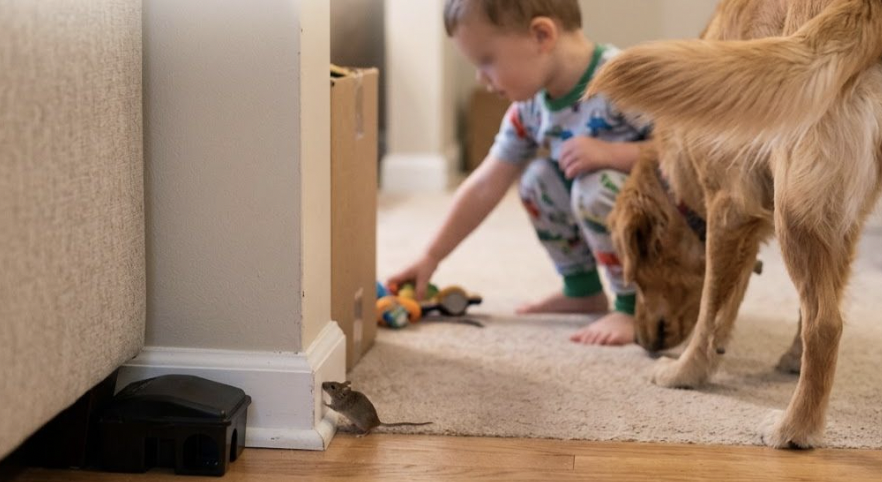
In Ohio, the landlord usually pays. Landlords must keep rentals fit and habitable, which covers infestations, while tenants must keep the unit sanitary. When a tenant’s housekeeping caused the mice, responsibility can shift.
Few disputes sour a rental faster than this one. The tenant finds droppings in the kitchen, calls the landlord, and the landlord says it is the tenant’s problem. The tenant points at the lease, the landlord points at the tenant’s housekeeping, and meanwhile the mice do not care whose name is on the deed. At Lakewood Exterminating, we work both sides of this conversation every month across Lakewood, Cleveland, and the west suburbs, with tenants who call us for advice and with landlords and property managers who send work orders.
Here is how Ohio law actually splits the responsibility, what tenants can do when a landlord drags their feet, and what landlords should know before a one-unit problem becomes a building-wide one. One note up front: this is general information, not legal advice. For your specific lease, talk to an attorney or a legal aid office.
What Ohio Law Says About Mice in Rentals
Ohio landlord-tenant law lives in Chapter 5321 of the Ohio Revised Code, and two sections frame every mouse dispute. Under ORC 5321.04, the landlord must keep the property fit and habitable, comply with health and housing codes, keep common areas safe and sanitary, and maintain the structure and systems. Under ORC 5321.05, the tenant must keep the unit safe and sanitary, dispose of garbage properly, and avoid damaging the place.
Neither section says the words mouse exterminator, which is why the arguments happen. But an established infestation touches the landlord’s habitability duty almost every time, especially when mice are getting in through the structure itself: foundation gaps, utility penetrations, worn door sweeps. Ohio landlord mouse responsibility gets much clearer once you ask where the mice came from.
So Who Pays for the Exterminator?
The practical split comes down to cause and structure. If the mice were there before move-in, or they are entering through building defects, that is the landlord’s problem to fix and to pay for. If the infestation traces to a tenant’s housekeeping, open food, or piled garbage, the landlord can reasonably push the cost back, and some leases say exactly that. The cause question is why documentation matters so much for both sides, which we will get to below.
| Scenario | Who typically pays | Why |
|---|---|---|
| Mice present before move-in | Landlord | Habitability duty applies from day one of the lease |
| Mice entering through structural gaps or foundation defects | Landlord | The building envelope is the owner’s to maintain |
| Infestation traced to tenant housekeeping or stored food | Tenant | Tenant’s duty to keep the unit safe and sanitary |
| Mice in shared areas of a multi-unit building | Landlord | Common areas must stay safe and sanitary under ORC 5321.04 |
| Lease assigns pest control to the tenant | Gray area | Lease terms matter, but health and housing codes still apply; get legal advice |
| One unit in a building where mice move between units | Landlord, in practice | Treating one unit while neighbors are infested solves nothing |
What Tenants Can Do When the Landlord Will Not Act
Ohio gives tenants a real remedy, but it has a procedure, and skipping steps is where tenants get hurt. The sequence under tenant rodent rights in Ohio is: written notice first, reasonable time to fix (the statute reads as the sooner of a reasonable time or 30 days), and you must be current on rent. If the landlord still does nothing, your options are rent escrow, a court order, or in serious cases lease termination. One exception to know: these remedies do not apply to a landlord with three or fewer units who disclosed that in writing in the lease.
One thing trips people up constantly: you cannot just stop paying rent. Ohio law requires you to pay the rent into the court through the escrow process instead, and Ohio Legal Help, the statewide nonprofit legal information site, lays out the landlord-tenant rules in plain language, including why withholding rent on your own backfires.
| Step | What to do | Where |
|---|---|---|
| 1. Report in writing | Email or letter describing the activity, with photos and dates | To your landlord or property manager; keep a copy |
| 2. Give reasonable time | The sooner of a reasonable time or 30 days under ORC 5321.07 | From the date of your written notice |
| 3. Document everything | Photos of droppings, gnaw marks, nests, and entry gaps, dated | Your own records; back them up |
| 4. Escrow the rent | Pay rent to the court, not the landlord; you must be current on rent | Your municipal or county court clerk |
| 5. Report health concerns | File a property complaint if conditions are unsanitary | Your local health department |
| 6. Get legal advice | Escrow disputes, lease clauses, and termination are legal calls | Legal aid office or a tenant attorney |
What Landlords Should Do (and Why Fast Is Cheaper)
If you own or manage rentals, the expensive version of this story is the slow one. Mice move between units through wall voids and utility chases, so a single kitchen call in a four-unit building is rarely a single-unit problem. At Lakewood Exterminating, we run property-management work orders every week, and the pattern is consistent: the landlords who treat the building early spend less than the ones who argue about whose fault the first unit was.
A few things worth knowing about how we work with rentals. Property-management work orders default to our mouse control service as a single service unless the three-visit plan is specifically requested, and we do not discuss repair recommendations with tenants, only with the owner or manager. Additional living units add $50 to $100 per unit depending on the plan, which makes a building-wide sweep far cheaper per door than treating units one at a time.
For larger buildings and portfolios, our commercial mouse control in Westlake and Bay Village service is built for exactly this: shared entry points, common areas, and a plan that covers the whole structure instead of playing whack-a-mole unit by unit.
Documenting the Problem (Both Sides Should)
Whether you are the tenant building a paper trail or the landlord defending one, the evidence is the same: dated photos of droppings, gnaw marks, nesting material, and the entry gaps themselves. Note the rooms, the dates, and whether activity is getting better or worse after treatment. If you are not sure what you are looking at, our guide to the signs of a mouse infestation walks through droppings, rub marks, sounds, and smells in detail.
For tenants, this record is what makes a written notice stick. For landlords, it is what separates a quick fix from a dispute you cannot win. Either way, an exterminator’s inspection report carries more weight than either side’s word, because it documents the cause, not just the presence.
What Mouse Control Costs in a Rental
Pricing does not change because the property is a rental. Our flat fees apply: $240 plus tax for a single service, $460 plus tax for the three-visit plan with a 90-day warranty, plus $50 to $100 per additional living unit in multi-unit buildings. Apartment buildings with more than six units are priced by labor instead, starting at $200 per hour plus materials. For the broader context on where that money goes, our breakdown of real pest control costs covers what drives pricing up or down.
The practical question in rentals is usually who schedules, not what it costs. Ohio landlords must give tenants reasonable notice before entering (24 hours is presumed reasonable), and the owner or manager coordinates access with the tenant. For any rodent work in a rental, the landlord has to be our customer, so we cannot book mouse service directly with a tenant.
Frequently Asked Questions
Does my landlord have to pay for a mouse exterminator in Ohio?
In most cases, yes. ORC 5321.04 requires landlords to keep rentals fit and habitable and to comply with health codes, and an established mouse infestation, especially one entering through the structure, falls under that duty. The main exception is an infestation caused by the tenant’s own housekeeping.
Can I withhold rent because of mice in Ohio?
No, and this mistake costs tenants. Ohio law does not let you simply stop paying. The legal version is rent escrow: after written notice and a reasonable repair window, you pay your rent to the municipal or county court instead of the landlord, and you must be current on rent to qualify.
What if my lease says pest control is my responsibility?
Lease clauses like that exist and they matter, but they do not erase health and housing codes or the habitability duty. A clause might cover a minor, tenant-caused problem while a structural infestation still lands on the landlord. Gray areas like this are exactly what legal aid offices handle every day.
Who pays in a duplex or multi-unit building?
Usually the landlord, because mice do not respect unit boundaries. Shared walls, chases, and common areas are the owner’s responsibility, and treating one unit while the neighboring unit stays infested accomplishes nothing. Expect a building-wide approach to be the effective one.
How long does a landlord have to fix a mouse problem in Ohio?
After written notice, the statute frames it as the sooner of a reasonable time or 30 days. What counts as reasonable scales with severity: a mouse running through a nursery is a faster clock than old droppings in a basement corner. Document your notice date, because that is when the clock starts.
Can I break my lease over a mouse infestation?
Possibly, but it is the last resort, not the first. Lease termination is one of the remedies available under ORC 5321.07 after written notice and a failed repair window, and getting it wrong can leave you owing rent. Talk to legal aid or an attorney before you move out over mice.
Should the tenant or the landlord call the exterminator?
The landlord should, because they authorize the work and typically pay for it. Tenants should report in writing and cooperate with scheduling. At Lakewood Exterminating, the landlord has to be the customer for any rodent work, so we schedule rental mouse service through the owner or manager.
Landlords and Tenants Both Win When Mice Lose
Mice in a rental are a shared problem with a fast, affordable fix when everyone plays their role: tenants report and document, landlords authorize and act. If you own or manage units on the west side of Cleveland, book a building-wide inspection and we will map the entry points and give you a price before any work starts. Tenants and landlords alike can reach Lakewood Exterminating at (216) 466-2486.