Yes. A garage mouse exterminator removes mice from attached garages, seals the entry points they use, and protects parked cars by eliminating the population around them. Lasting engine bay protection starts with the garage, not the car.
Every October, the calls start coming in from Westlake homeowners with the same two discoveries: droppings along the garage wall, and a nest or chewed wires under the hood of the car parked inside. At Lakewood Exterminating, garages are some of our most common mouse calls on the west side of Cleveland, because an attached garage is the easiest room in your house for a mouse to enter and the hardest one for you to keep them out of.
Here is why garages attract mice, what they do to a parked car, how we clear them out, and what actually keeps them from coming back.
Why Mice Love Westlake Garages in Fall
An attached garage offers a mouse everything it needs in October: shelter from the Lake Erie chill, darkness, clutter to nest in, and often food, in the form of bird seed, pet food, or garbage bins. The garage door itself is usually the way in. Bottom seals wear out and shrink, side seals rot, and all a mouse needs is a gap the size of a dime.
The attached part is what turns a garage problem into a house problem. Garages share a wall and usually a ceiling with your living space, and the service door, utility penetrations, and ceiling gaps all lead inward. If you want the full map of those openings, our guide on how mice get into Ohio homes covers every common entry point we find on inspections. The short version: mice in the garage are one unsealed gap away from mice in the kitchen.
What Mice Do to a Parked Car
A car engine bay is a warm, dark, pre-insulated shelter, and a car that sits overnight in a mousey garage is an open invitation. Mice climb in from below, nest in the cabin air filter and blower area, shred hood insulation for bedding, and gnaw wiring. Rodents chewing car wires is not spite; their teeth never stop growing, so they gnaw constantly to keep them worn down. Some automakers have even faced lawsuits over soy-based wire insulation attracting rodents, which the manufacturers dispute, but either way the damage is real and a chewed engine harness can cost thousands to replace.
The signs are easy to spot once you know them: droppings on top of the engine cover, shredded insulation or leaves near the firewall, a musty smell from the vents when the blower starts, and unexplained check-engine lights. If you see any of these, the problem is not really in the car. It is in the garage around it.
How We Clear Mice Out of an Attached Garage
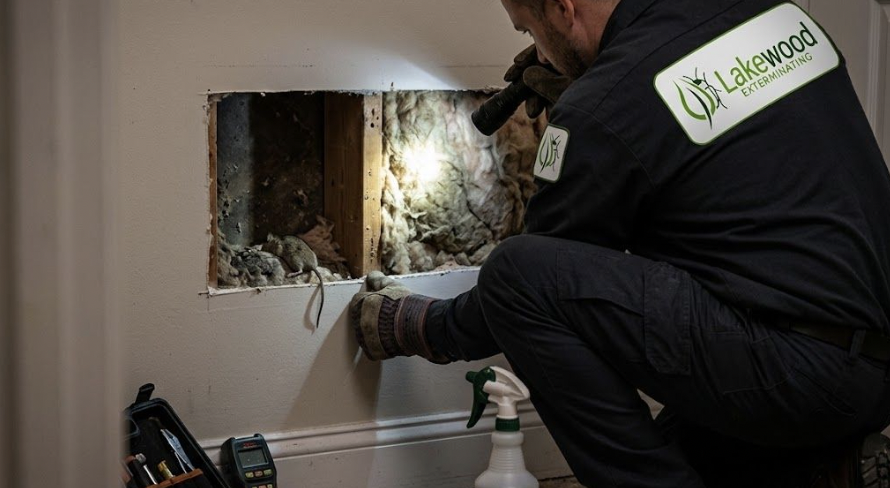
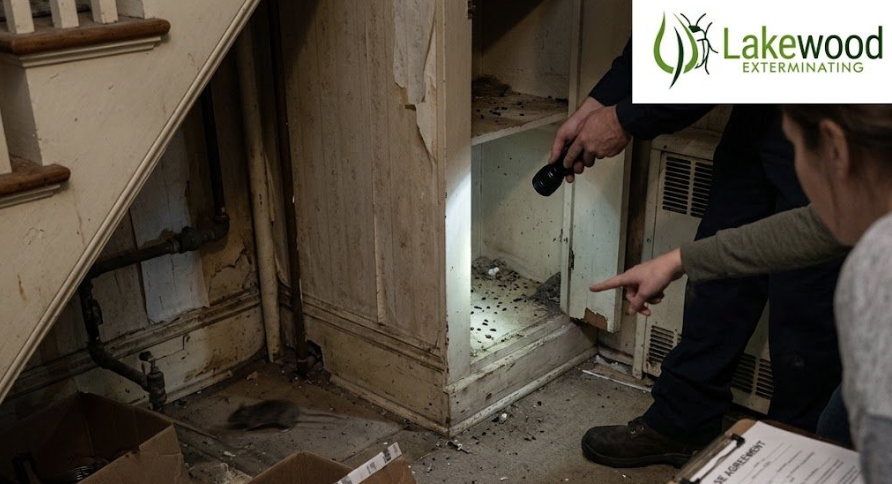
Clearing a garage is a population problem plus an entry problem, and we handle both on the same visit. At Lakewood Exterminating, a garage mouse call starts with an inspection: droppings and rub marks along walls, nesting spots in stored items and shelving, and the gaps they are using, especially the door seals and utility penetrations.
Then control goes in. Traps get placed along the wall runways mice actually travel, and where bait makes sense it goes inside locked, tamper-resistant stations, because garages are kid and pet territory too. All of it is part of our standard garage mouse control service, and before we leave you get a walkthrough of every placement plus straight advice on storage: seed and pet food into sealed bins, clutter off the floor, garbage lids tight.
Sealing the Garage: The Entry Points That Matter
Control removes the mice inside. Sealing decides whether new ones replace them. National Pest Management Association guidance on house mice recommends sealing every hole larger than a dime and any gap wider than a pencil, and garage doors fail that test more than any other feature of the house.
| Feature | Single service ($240 plus tax) | Three-visit plan ($460 plus tax) |
|---|---|---|
| Visits included | One | Initial visit plus two follow-ups |
| Warranty | None | 90 days from the first visit |
| Trap and bait upkeep | You maintain what we place | We maintain and reset everything |
| Follow-up pricing | Half price within 60 days ($120 plus tax) | Both follow-ups already included |
| Confirmation mice are gone | No | Yes, checked at the third visit |
Our initial service includes a square foot of ground-level patchwork sealing, and bigger garage exclusion jobs are quoted separately through our rodent-proofing work. One honest note from experience: replacing the bottom seal on a garage door is usually a door company job, not an exterminator job, and we will tell you that plainly rather than patch around it.
Protecting the Car Itself
Once the garage population is being controlled, a few habits protect the vehicle while the work settles. None of these replace control and sealing; they stack on top of it.
| Car protection step | Worth it? | Notes |
|---|---|---|
| Drive the car regularly | Yes | Stationary vehicles are prime shelter; a car that moves daily is a poor nest site |
| Traps along the garage walls | Yes | Part of our service setup, placed on the runways mice use to reach the car |
| Check the cabin filter and blower | Yes | Nests and droppings show up there first; replace a contaminated filter |
| Capsaicin rodent tape on wiring | As a supplement | Sold specifically for wiring protection; it helps but is not a fix on its own |
| Wire mesh over engine bay openings | Ask your mechanic | Blocks the physical routes into the bay |
| Loose poison anywhere near the car | Never | A poisoned mouse dying in a vent or blower means weeks of odor |
| Ultrasonic deterrent gadgets | Not recommended | Unreliable as actual control; do not count on them |
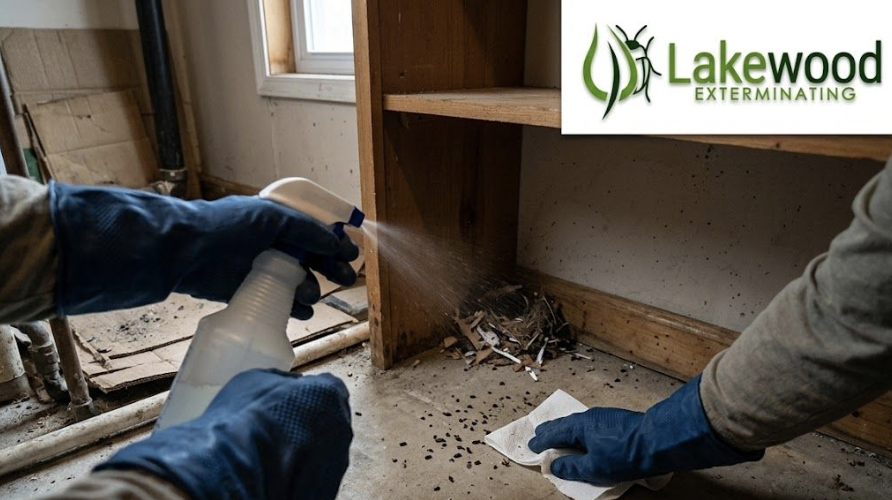
If droppings or nesting material end up in the engine bay or cabin filter area, do not vacuum or dry-sweep them. Mist with disinfectant, wipe up by hand with gloves, and replace the cabin filter if it is contaminated. Airborne particles from dried droppings are the thing to avoid.
One Visit or a Plan for Garage Mice?
Garages face constant outdoor pressure because the big door opens every day and the seals take a beating, so they are the classic case where a plan outperforms a single visit. If every gap gets sealed during the first service and activity was light, one visit can hold. If the seals need a door company or the population is established, expect follow-ups to matter.
The details, including who maintains the traps and what the 90-day warranty covers, are in our one-time vs multi-visit mouse treatment comparison. Pricing is flat either way: $240 plus tax for a single service, $460 plus tax for the three-visit plan, and no trip charge in Westlake.
Frequently Asked Questions
Can an exterminator get mice out of my garage?
Yes. A garage call is an inspection, control, and sealing visit in one: we find the runways and entry points, place traps or locked bait stations where mice actually travel, and seal the gaps we can. Garages are some of the most straightforward mouse jobs we do, as long as the entry points get addressed.
Why are mice chewing the wires in my car?
Rodent teeth never stop growing, so mice gnaw constantly to wear them down, and engine bay wiring is at the perfect height and texture for it. A parked car in a mousey garage also offers warmth and shelter, which is why the chewing usually starts after the car has been sitting overnight.
How do I keep mice out of my car engine?
Control the garage population and seal the garage first; the car problem is a symptom. Then stack the habits: drive the car regularly, keep food out of it, check the cabin filter and blower for nests, and ask your mechanic about wire mesh for engine bay openings. Capsaicin tape on wiring is a reasonable extra layer.
Will mice in the garage get into my house?
If the garage is attached, treat that as a when, not an if. Garages share a wall and ceiling with your living space, and the service door, utility gaps, and attic path all lead inward. Garage mice are the early warning, and dealing with them there is much easier than dealing with them in the kitchen.
Can you replace my garage door seal?
We seal the gaps around the door and the penetrations into the house. A square foot of ground-level patchwork is included in the initial service; anything beyond that, or anything that needs a ladder, is quoted separately. The bottom seal itself, the long rubber strip on the door, is usually a door company replacement, and we will point you that way when it is the real fix.
Is bait safe in a garage that kids or pets walk through?
Not as loose bait, which we never put where kids or pets can reach. Any rodenticide in a garage goes inside a locked, tamper-resistant station anchored out of reach, exactly like the rest of the house. In many family garages we rely on traps along the walls instead and skip interior bait entirely.
How much does garage mouse control cost in Westlake?
The same flat fees as the rest of the house: $240 plus tax for a single service, or $460 plus tax for the three-visit plan with a 90-day warranty. Westlake is inside our core service area, so there is no trip charge.
Get the Mice Out of the Garage Before They Reach the House
A garage mouse problem only gets cheaper to fix the earlier you catch it, and your car will thank you. Request a quote and mention the garage entry-point inspection, or call Lakewood Exterminating at (216) 466-2486. We will tell you over the phone what we are likely to find and exactly what it will cost.