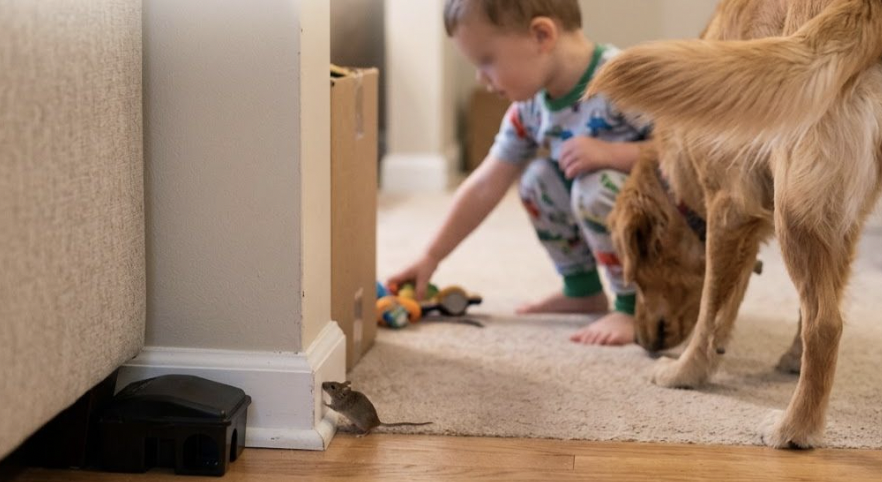
A mouse exterminator locates the likely wall void from activity patterns and odor strength, controls remaining live mice, and seals entry points. Cutting drywall is rarely needed; most carcasses dry out and the odor fades within weeks.
There is no mistaking it once you have smelled it: a sweet, sour, heavy odor that shows up out of nowhere and gets worse when the furnace kicks on. If you recently had mouse work done, or you have been meaning to, that smell usually means a mouse died somewhere you cannot reach. At Lakewood Exterminating, dead-odor calls are a normal part of mouse season on Cleveland’s west side, and the honest answer about what can be done surprises people in both directions.
Here is what the smell actually is, how long it lasts, what we can and cannot do about the carcass itself, and how to make sure there is not a next one.
What That Smell Actually Is
The odor is decomposition: sulfur compounds and other byproducts released as the carcass breaks down. Warmth and airflow move it around the house, which is why it gets stronger when the heat runs or when a return vent sits near the void. A mouse is small, which works in your favor. Small carcasses dry out fast, and dry is when the smell ends.
How fast that happens depends on size, temperature, and humidity. As the Cooperative Extension System’s expert answer on dead rodents in walls puts it, the odor goes away once the body dries out or is consumed by insects, and larger carcasses take longer and can leach fluids into the wood around them. A single mouse in a wall is the best-case version of this problem.
| Stage | What is happening | What to do |
|---|---|---|
| Days 1 to 3 | Odor starts as decomposition begins | Note where it is strongest; confirm no live activity remains |
| Days 3 to 7 | Peak odor, strongest near the void | Ventilate daily, place odor absorbers near the strongest spot |
| Weeks 2 to 3 | Carcass dries out, odor fades noticeably | Keep airflow going; the worst should be over |
| Beyond week 3 | Something bigger: multiple carcasses, a larger animal, or fluids leached into wood | Time for an inspection visit, not more air freshener |
What a Mouse Exterminator Can Actually Do
The honest list is shorter than the internet suggests, and more useful. What we can do: locate the likely void, control whatever is still alive, and make sure it does not happen again. What we generally do not do: open your drywall on a fishing expedition, because a mouse carcass is small, already drying, and usually not where the smell feels strongest anyway.
At Lakewood Exterminating, an odor call starts with the evidence, not the drywall. We map where the smell is strongest at different times of day, where traps or bait stations showed takes, where droppings and rub marks concentrate, and which void the activity pattern points to. That narrows it to a section of wall or a ceiling bay instead of a whole house. If the carcass is reachable through an attic, crawl space, or an existing opening, we will point you to the spot; carcass removal itself is not part of our service. If it is sealed in a wall, the timeline table above is the realistic plan.
The more important half of the visit is the live side. A dead mouse in the wall means a population existed, and where there was one mouse there are usually more. Mouse exterminator aftercare, the follow-up and monitoring part, is what turns one bad week of odor into the end of the problem instead of a chapter break.
What the Smell Tells You About the Treatment
If you had bait-based control done recently, a carcass in the wall is often the sound of the plan working, not failing. Rodenticide does its job where the mice live, and mice live in voids. That is the tradeoff of baiting: you will not retrieve the carcasses, and occasionally one announces itself for a week or two.
If that tradeoff bothers you, especially in a home with kids or pets, say so at booking. Trap-based control keeps carcasses retrievable, and it just needs more upkeep, which is exactly what follow-up visits are for. Our guide to bait station safety for kids and pets covers how stations, placement, and trap-based options compare for families.
Dead Mouse Odor Removal: What Actually Works While You Wait
There is no spray that neutralizes decomposition, no matter what the label promises. What works is dilution, absorption, and time. Ventilate the affected rooms daily, put absorbers at the strongest point, and let the carcass dry. Most mouse odors peak inside the first week and fade to nothing by week three.
| Method | Worth it? | Notes |
|---|---|---|
| Open windows and cross-ventilation | Yes | Free and genuinely effective; do it every day |
| Activated charcoal or odor absorber tubs | Yes | Place them at the strongest spot, not across the room |
| Carbon-filter air purifier | Yes | Helps with the airborne compounds, especially overnight |
| Enzymatic odor products | Yes | Designed to break down organic odor rather than cover it |
| Baking soda or coffee grounds | Mildly | Fine as an extra layer; absorbs or masks a little |
| Air fresheners | Masks only | You will simply smell both things at once |
| Ozone generator | With caution | A lung irritant; empty room only, follow the label exactly |
| Cutting the wall open | Last resort | Rarely finds much; the carcass is small and already drying |
When the Smell Is Something Bigger
A mouse-scale odor fades on a mouse-scale timeline. If you are past week three with no improvement, suspect something else: several carcasses in one void, or a larger animal entirely. A bigger carcass means a longer, stronger problem.
The other telltale is flies. Blowflies appearing inside the house, especially near a wall or vent, often means a carcass close enough for them to find and breed in. Our guide to a dead animal causing fly problems in the house explains that connection and what to watch for. Flies plus a smell that will not quit is the combination where an inspection visit stops being optional.
How We Keep It From Happening Again
The only good long-term answer to carcasses in walls is a house mice cannot enter. Once the immediate issue passes, exclusion is the real fix: finding and sealing the entry points that let the population in, then keeping traps or stations in place as a monitoring system so you catch the next scout in days, not months.
That is how our mouse control service is built: inspection, control, patchwork sealing in the initial visit, and on the three-visit plan, a 90-day warranty with us maintaining everything. A home that is sealed and monitored rarely develops wall carcasses, because it rarely develops mice.
Frequently Asked Questions
How long does a dead mouse smell last in a wall?
For a single mouse, expect a noticeable odor for one to three weeks: a few days building, a peak around days three to seven, then a fade as the carcass dries. Warm rooms speed the process up, cool humid voids slow it down. Anything past three weeks deserves a closer look.
Can an exterminator find a dead mouse in the wall?
We can narrow it to a likely void using odor strength at different times of day plus the activity evidence from inspection. Nobody sees through drywall, and exact location inside a sealed wall is usually unnecessary, because the carcass dries out on its own. Removal makes sense when it is reachable through an attic, crawl space, or existing opening.
Should I cut into the wall to remove a dead mouse?
Usually no. A mouse is small, dries quickly, and is often not where the smell feels strongest, since airflow moves odor around. Cutting blind tends to produce drywall repair bills and an empty hole. If the odor passes the three-week mark or flies show up, an inspection visit is the smarter first move.
Does a dead mouse smell mean the treatment worked?
Often, yes. If you recently had bait-based control, a carcass in a void usually means the bait reached the population. It is the known tradeoff of rodenticide: carcasses are not retrievable. If that tradeoff does not work for your household, ask for a trap-based approach next time, where carcasses are collected.
Are blowflies in the house a sign of a dead mouse?
Frequently. Blowflies find carcasses fast and breed in them, so a sudden cluster of large, sluggish flies near a wall or vent is one of the most reliable signs of a dead animal nearby. Flies plus persistent odor is worth a professional look.
Is the odor itself dangerous to breathe?
The smell is offensive but the odor itself is not the disease route; the risk comes from disturbing dried droppings or the carcass, which can send particles airborne. Ventilate, use odor absorbers, and if you clean around the area, disinfect and wet-wipe rather than sweeping or vacuuming dry.
How do I stop this from happening again?
Exclusion first: seal the entry points so new mice cannot get in. Then monitoring: traps or locked stations that show activity early. On our three-visit plan we maintain all of it for you, and the 90-day warranty covers the window where problems usually resurface.
Get the Smell and the Source Handled Together
A dead mouse in the wall is the end of one problem and the proof of another. If you are dealing with the odor, or you want the entry points sealed so there is no sequel, request a quote and mention the odor. You can also call Lakewood Exterminating at (216) 466-2486 and describe what you are smelling; we will tell you honestly whether a visit is worth it or time will handle it.
🎧 Listen to this as a podcast
Also on Apple Podcasts, Spotify, and Amazon Music.