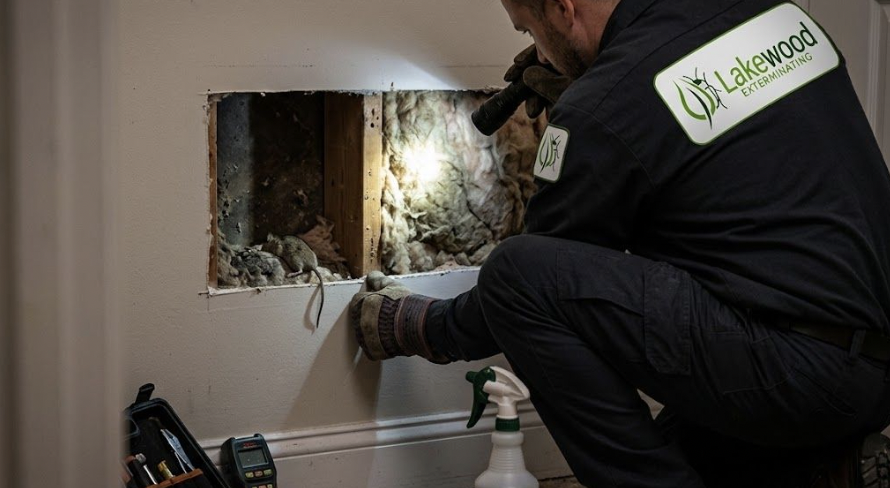
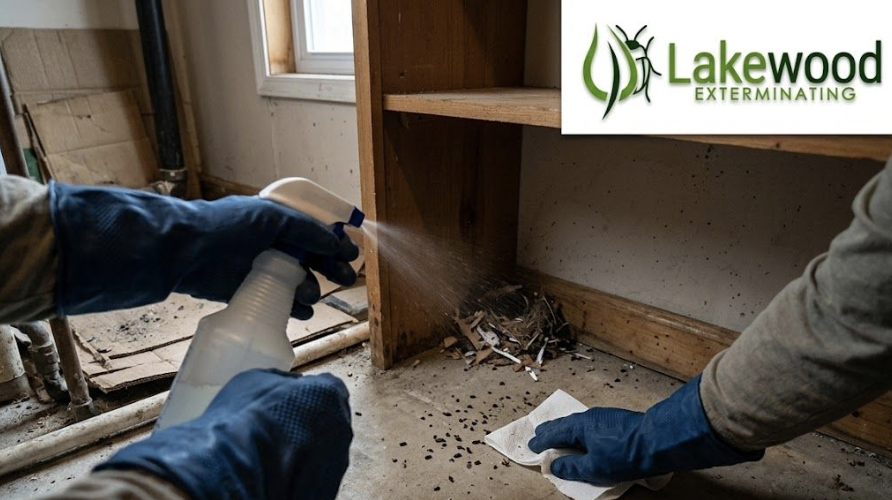
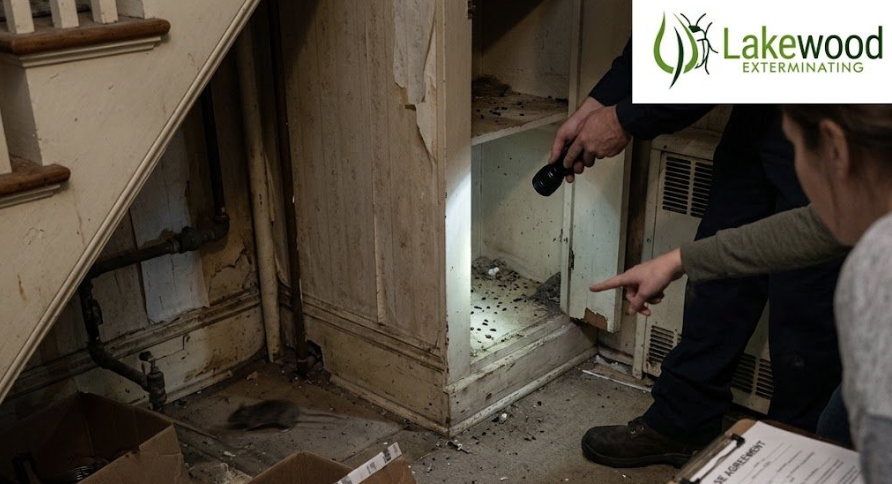
Yes, when placed correctly. Professional mouse control uses tamper-resistant bait stations that lock and anchor out of reach of children and pets, typically in unfinished areas like the basement sill plate, so treatment works without exposing your family.
If you have a toddler who treats the basement like a playground, or a dog who investigates every corner of the house nose-first, this is the question that matters before any mouse work starts. At Lakewood Exterminating, we hear it on most family calls across Lakewood and the west Cleveland suburbs, and the short answer is genuinely reassuring: professional mouse control is designed around kids and pets, not despite them.
The longer answer comes down to design and placement: what a tamper-resistant station actually is, where bait should and should never go, and what the real risks are. Here is the honest version, including the parts most companies skip.
What Tamper-Resistant Actually Means
A tamper-resistant bait station is a locked, anchored box that holds rodenticide on internal rods, so the bait cannot be shaken out, picked out, or reached by children, pets, or other animals. Opening one takes a key or a tool, not curiosity.
The details matter. Bait blocks sit fixed on rods inside the station, so a mouse cannot drag them out into the open. The station itself gets anchored or weighted so a determined dog cannot carry it off, and the entry holes are sized for a mouse, not a paw or a small hand. The station does not trap the mouse. It protects the bait, and it doubles as a monitoring point, because feeding marks inside tell us how active the population still is.
Cheaper non-tamper-resistant stations exist, and they are exactly what they sound like. We do not use them at all. Every station we place is rated Tier 1 tamper-resistant, with the bait locked on metal rods, a concrete weight anchoring the box, and a unique key to open it. If a company quotes you a price that seems too good, that is one of the first questions to ask.
Where We Place Bait Stations (and Where We Never Do)
Placement is the real safety system. Bait stations go where mice travel and families do not: on top of foundation sill plates in unfinished basements, behind appliances, in attics when activity calls for it, and along exterior foundation lines in locked stations.
What we never do is leave bait where anyone can reach it. No pellets behind the couch, no open trays under the sink. Indoors, rodenticide goes inside a locked station, or as soft bait into spaces nobody can get to, like wall voids, crawlspaces, and un-walkable attics. In many family homes we lean on traps indoors and keep rodenticide to locked basement and exterior stations only.
That placement logic is built into our mouse control service from the first visit, and before we leave we walk you through every placement so you know exactly what is where and why.
The Honest Risks of Rodenticide Around Pets
Rodenticide is poison, and pretending otherwise helps no one. The risks are real but manageable, and they come from three places: direct bait contact, secondary poisoning, and carcasses.
Direct contact is what stations and placement solve. Secondary poisoning, a pet eating a mouse that ate bait, is less common than direct contact but real, especially for small dogs and cats that hunt. Carcasses are the tradeoff of any bait program: a poisoned mouse usually dies in a wall void or another hidden spot, which can mean temporary odor. We are upfront about that at booking because you deserve the full picture, not the tidy version.
The ASPCA’s rodenticide safety alert is blunt about the stakes: rodenticides in all forms are toxic to cats and dogs, causing bleeding, kidney failure, seizures, or death when ingested. That is exactly why we treat station design and placement as the safety system rather than the bait itself, and why we keep a record of what we placed, where we placed it, and which active ingredient it contains.
| Control tool | Risk around kids and pets | How we place it |
|---|---|---|
| Tamper-resistant bait station | Very low when locked and anchored; bait stays on rods inside | Basement sill plates, unfinished areas, behind appliances, exterior foundation lines |
| Snap trap | Low, but snap force can hurt curious fingers or paws | Inside protective Trap-rite boxes, attics, behind appliances, other unreachable spots |
| Loose bait or pellets | High; directly accessible poison | Never where people or pets can reach; soft bait only goes into sealed-off voids and crawlspaces |
| Glue board | No chemical risk, but pets can get stuck and cleanup is stressful | Rarely, and only in monitored, inaccessible locations |
| Ultrasonic repellent | No chemical risk, but unreliable as actual control | Not part of a professional treatment plan |
Traps vs Bait Stations in Homes With Kids and Pets
Neither tool is automatically safer. Placement decides both. A snap trap behind a refrigerator is safer than a bait station a puppy can chew on, and a locked station on a basement sill plate is safer than a trap a toddler can reach.
Snap traps carry one real risk: snap force. We deal with that by setting traps inside protective housings or in places that are physically out of reach, like attics and the gap behind appliances. For most family homes the mix ends up as traps indoors plus locked bait stations in the basement and along the exterior, with less chemical reliance over time as exclusion work seals the entries.
What We Do Differently for Households With Children and Pets
Being a pet-safe mouse exterminator is mostly process, not product. When you book, we ask about kids, pets, and their routines, including where food bowls, litter boxes, and crates sit. During the visit, the technician works around those zones. Before we leave, you get a walkthrough of every placement plus a record of the products and active ingredients used, which is worth keeping in your vet’s file.
The same discipline runs through everything we apply indoors, and we have published our full pesticide safety practices if you want the longer version of how product choices and application rules work across all our services.
If your questions go beyond mice, our pet-safe pest control FAQ covers the rest, from quarterly treatments to ant and cockroach work.
If a Pet or Child Contacts Bait: What to Do
Call your veterinarian or the ASPCA Animal Poison Control Center at (888) 426-4435 right away. Do not wait for symptoms. Anticoagulant baits can take three to five days to show effects, and treatment is far easier before they start. Bring the bait packaging or the service record we leave with you, because the active ingredient determines the treatment.
| Situation | What to do |
|---|---|
| Dog chewed a bait station | Take the station away, check whether any bait is missing, and call your vet or ASPCA Poison Control at (888) 426-4435 if it is |
| Pet ate a mouse that may have been poisoned | Same call. Secondary poisoning is less common than direct bait contact, but treat it seriously, especially with small pets |
| Child touched or partly opened a station | Wash hands thoroughly. Stations are keyed, so full opening is unlikely, and call us so we can re-secure or relocate it |
| You find bait outside a station | Do not handle it bare-handed. Bag it with gloves or a paper towel and call us so we can check the placement |
| You see symptoms: lethargy, pale gums, bleeding, seizures | Emergency vet immediately, with the bait packaging or our service record in hand |
Using Less Bait Over Time
The safest mouse program is the one that needs less bait every quarter. That means exclusion: sealing the entry points so the population outside never becomes the population inside. Every patch of foam and fabric we install is one less reason for bait to stay down long-term.
Maintenance is the other half. On our three-visit plan we check, service, and re-secure every station ourselves, so nothing runs empty or gets left loose. On a single service, that upkeep belongs to you. If you are weighing the two, our one-time vs multi-visit mouse treatment comparison breaks down exactly who maintains what, and what the warranty covers.
You can shrink the problem from the outside too. Sealed food containers, no bird feeders, and regular pickup of acorns all cut the food supply that keeps mice interested in your house in the first place.
Frequently Asked Questions
Are mouse bait stations safe to use around kids and pets?
Yes, when two conditions are met: the station is genuinely tamper-resistant (locked, keyed, anchored, bait fixed on internal rods) and it is placed where children and pets do not go. Both conditions are standard practice in our service, not an upgrade.
What is a tamper-resistant bait station?
A locked, anchored box that holds rodenticide on rods inside so the bait cannot be removed. It takes a key or tool to open, resists chewing and weather, and its entry holes are sized for mice only. It protects the bait and acts as a monitoring point for activity.
Can my dog or cat get poisoned by eating a mouse that ate bait?
It is possible but less common than direct bait contact, because the pet gets a much smaller dose from a carcass than from bait itself. Small pets and cats that hunt face the most risk. If you suspect it happened, call your vet or ASPCA Poison Control at (888) 426-4435 rather than waiting for symptoms.
Where do exterminators put bait stations?
Where mice travel and families do not: on foundation sill plates in unfinished basements, behind appliances, in attics when needed, and along exterior foundation lines. You should get a walkthrough of every placement before the technician leaves.
Are snap traps safer than rodenticide around pets?
Different risks, both solved by placement. Snap traps have no poison but real snap force, so they belong inside housings or in unreachable spots. Rodenticide has no mechanical risk but is toxic, so it belongs in locked stations. Most family homes end up with a mix of both.
What should I do if my dog eats mouse bait?
Call your veterinarian or ASPCA Animal Poison Control at (888) 426-4435 immediately, even if the dog seems fine. Anticoagulant baits can take days to show symptoms, and early treatment is simple compared to late treatment. Bring the bait packaging or your service record so the vet knows the active ingredient.
Is pet-safe mouse extermination more expensive?
No. Tamper-resistant stations and careful placement are how we work in every home, not a premium add-on. Our flat fees are the same whether or not you have kids and pets, because the safe version is the only version we do.
Talk to a Pet-Safe Mouse Exterminator
Every home layout is different, and so is every pet. When you are ready, ask how we place bait out of reach and we will walk you through exactly where each station would go in your house before anything gets set. Or call (216) 466-2486 for a straight answer from Lakewood Exterminating.