A bad fly problem is rarely about the flies you see buzzing the kitchen. It’s about where they’re breeding — and on Cleveland’s west side, that source is usually hidden. We handle two completely different fly problems for homeowners, and the right fix depends on which one you’ve got. This guide covers how to tell them apart, which methods actually work, and when it makes sense to call a Fly Exterminator in Cleveland. Get the source right and the flies disappear; miss it, and you’ll be swatting for weeks.
What Are the Signs and Severity Levels of Fly Infestations in Cleveland Homes?
Flies move fast. A house fly can go from egg to adult in as little as 7 to 10 days, so a few flies around a hidden food source become a swarm in under two weeks. That speed is why a minor problem turns severe so quickly — and why finding the breeding site matters far more than killing the adults you can see.
How to Identify Common Fly Species and Their Impact Indoors
The first job is figuring out what kind of fly you have, because that tells you where it’s coming from. We sort the flies we treat into two groups: small flies and large (filth) flies.
| Fly | Size | Where it breeds | What it tells you |
|---|---|---|---|
| House fly | 1/8″–1/4″, gray with four dark stripes | Garbage, manure, decaying matter | A sanitation issue or a hidden organic source |
| Blow / bottle fly | 1/8″–5/8″, metallic blue or green sheen | Dead animals and carcasses | Usually a dead rodent or bird in the structure |
| Cluster (“attic”) fly | ~3/8″, sluggish, golden hairs on thorax | Inside earthworms outdoors; overwinters in walls and attics | Seasonal — collects at windows in fall and early spring |
| Fruit fly | Tiny, tan, red or dark eyes | Overripe produce, drains, drain biofilm | A breeding site in the kitchen or a drain |
Small flies — fruit flies, fungus gnats, and drain flies — point to something in the kitchen: an onion forgotten in a cabinet, fruit that rolled out of sight, or the gelatinous film inside a drain. Large filth flies — house, blow, bottle, and flesh flies — point to something bigger, and usually worse.
What Indicates a Severe Fly Infestation Requiring Professional Help?
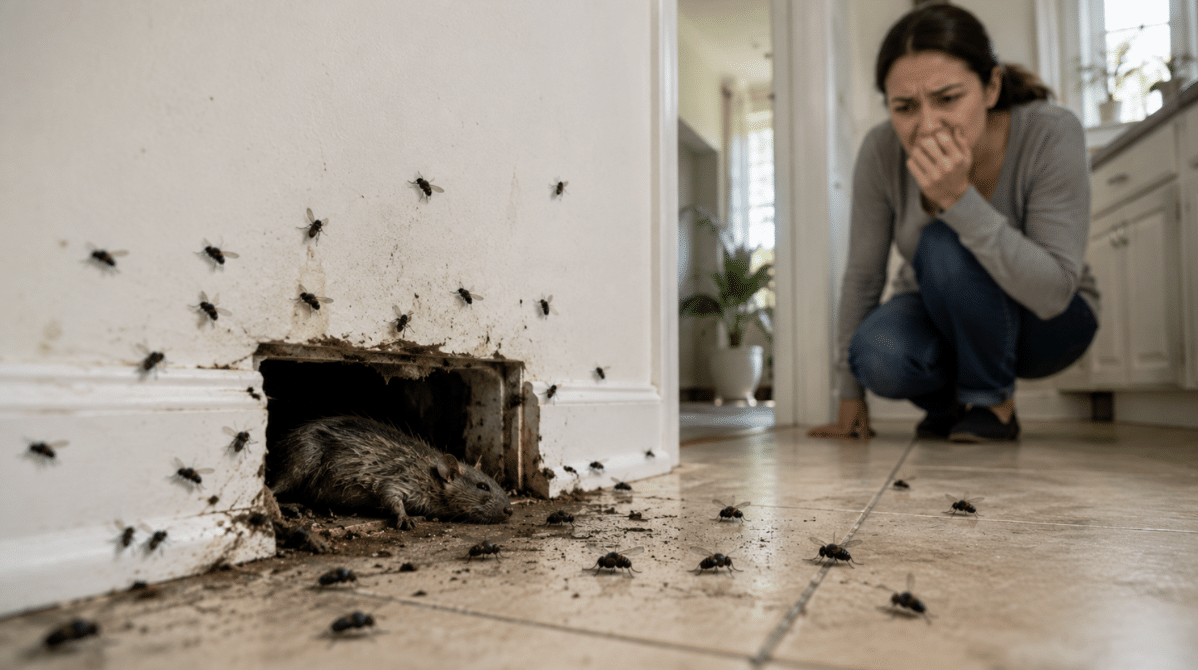
Here’s what most homeowners don’t realize: when a swarm of large flies suddenly shows up indoors with no obvious garbage source, the cause is almost always an animal that died where you can’t see it. A bird or squirrel that got into the chimney, a mouse that died in a wall void — the carcass becomes a breeding factory for blow flies and house flies. We see this constantly on the west side, especially in older homes with uncapped chimneys.
So the signs it’s time to call: a sudden surge of large flies in one or two rooms, flies clustering at windows trying to get out, or a faint odor you can’t place. Blow flies with that metallic sheen are a particularly strong tell — they breed in carcasses, so if you’re seeing them, something has died nearby. The carcass itself has to come out (a chimney sweep or wildlife pro handles that part), but we handle the fly side: locating the larval sources, knocking down the population, and treating the resting areas.
Which Indoor Fly Control Methods Are Effective for Immediate Reduction?
You can buy yourself some relief while you track down the source, but be clear-eyed about what these methods do and don’t do.
How Do Indoor Fly Traps Work to Reduce Fly Populations?
Indoor traps use light or scent to draw flies in, then catch them on a sticky surface or an electric grid. Insect light traps work well for the steady trickle of flies that slips in every time a door opens, and they double as a monitoring tool — where flies collect tells you where the problem is. But a trap only catches adults. It does nothing about the eggs and larvae still developing at the source, which is why traps alone never end an infestation.
What Are Safe and Proven DIY Treatments for Controlling Flies Indoors?
For fruit flies specifically, a few simple things help:
- Apple cider vinegar trap: a bowl of cider vinegar with a few drops of dish soap. The vinegar draws them in; the soap breaks the surface tension so they sink.
- Clean your drains: dark-eyed fruit flies and drain flies breed on the film inside drainpipes, so scrubbing the drain removes the nursery.
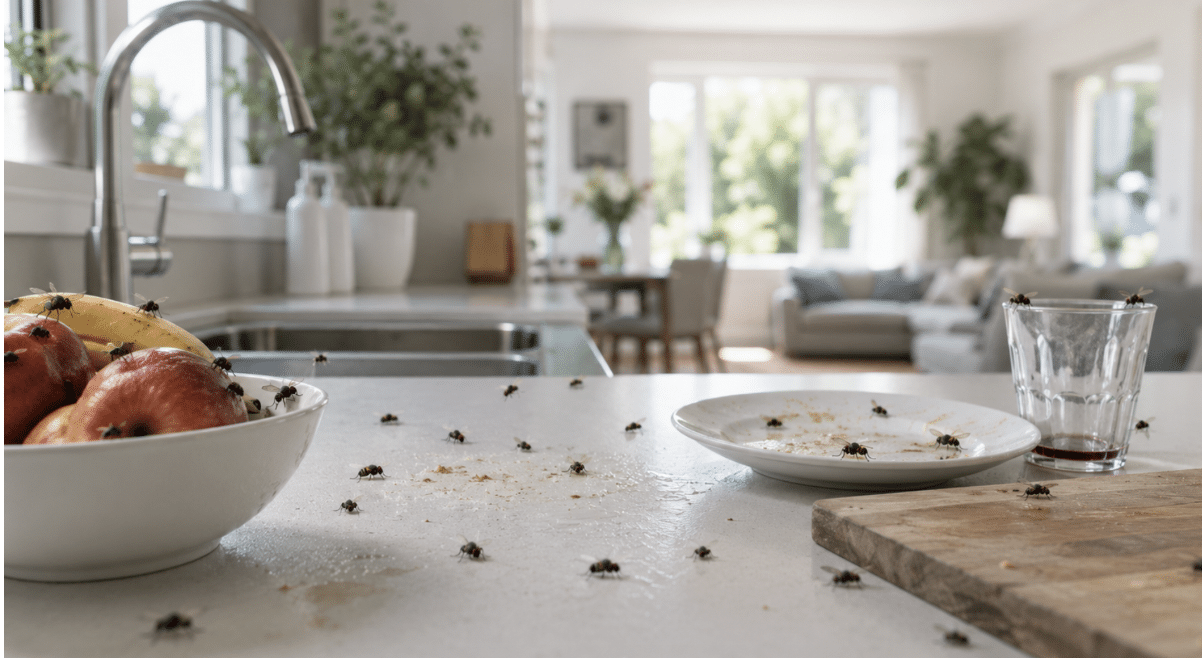
- Find and toss the source: most kitchen fruit fly outbreaks come down to one forgotten onion, potato, or piece of fruit. Find it and the problem usually ends on its own.
Skip the peppermint and essential-oil “repellent” sprays. They don’t solve a breeding problem, and they won’t touch a real infestation. The honest truth from years of this work: you don’t spray your way out of flies. You find what they’re breeding in and you remove it.
When and Why Should Homeowners Call Professional Fly Extermination Services in Cleveland?
Call a professional when the flies keep coming back after you’ve cleaned up, when a swarm of large flies appears with no visible source (that hidden carcass again), or when you’ve got fruit flies in a commercial kitchen where biofilm in the drains is feeding them. We can find larval sources that aren’t obvious, treat them directly, and tell you straight whether the problem is something we treat or something that needs a plumber or chimney pro first.
One honest note: because fly problems are sanitation problems at heart, we don’t warranty fly treatments — if the source comes back, the flies come back. What we do is fix the current problem and show you exactly what’s feeding it so it doesn’t return. Follow-up visits are half-price within 60 days.
What Customized Fly Control Plans Does Lakewood Exterminating Offer?
We run two fly services, both starting from $200 plus tax. Small Fly Service covers fruit flies, fungus gnats, and drain flies — mostly drain treatments, baited traps, and pinpointing the breeding site. Filth/Large Fly Service covers house, blow, bottle, and flesh flies — inspection to locate the larval source, interior fly-bait application to garbage receptacles, windows, lights, and resting areas, plus sanitation recommendations.
How Does Professional Integrated Pest Management Target Severe Infestations?
Integrated Pest Management just means we go after the source, not the symptom. We inspect first to find where flies are breeding, treat those sites directly, and bait the areas where adults rest and feed. For homes with a recurring summer fly problem, we offer ongoing exterior service from May through August: boric acid in the bottom of garbage receptacles, spray treatment of door and wall junctions and resting spots like fence lines, and fly bait on the can lids. Spraying the air kills the flies in the room for an hour; treating the source keeps them gone.
What Preventive Measures Can Cleveland Homes Implement to Avoid Future Fly Infestations?
Prevention is mostly about denying flies a place to breed.
Which Home Maintenance Tips Effectively Deter Fly Breeding Sites?
- Manage garbage: tight-fitting lids, kept closed, emptied and rinsed regularly. Store cans at least 25 feet from entry doors when you can.
- Stay on top of organic waste: pick up dog waste daily, and don’t let decaying vegetation or fallen fruit pile up near the house.
- Seal and screen: seal utility holes on exterior walls, and make sure window and door screens fit tight with no rips. Cluster flies in particular squeeze through tiny gaps around windows and baseboards to overwinter in your walls.
How Does the Local Cleveland Environment Affect Fly Prevention Strategies?
Our warm, humid summers speed up fly breeding — that 7-to-10-day cycle runs fastest in the heat, so July and August are peak season for filth flies. Fall brings a different visitor: cluster flies, the sluggish “attic flies” that gather at sunny windows as they look for a place to overwinter. Tightening up the exterior in early fall keeps them out of the walls before they settle in.
What Are Common Questions About Fly Infestation Solutions Answered?
How Long Does It Take to Eliminate Flies from a Severely Infested Home?
Once the breeding source is removed, the existing adults usually die off within one to three weeks. The timeline depends entirely on the source — pull a dead animal out of a chimney and the flies fade fast; leave it, and no treatment will keep up, because a fly generation completes in as little as 7 to 10 days.
What Kills Flies Fast Indoors Without Harm to Residents?
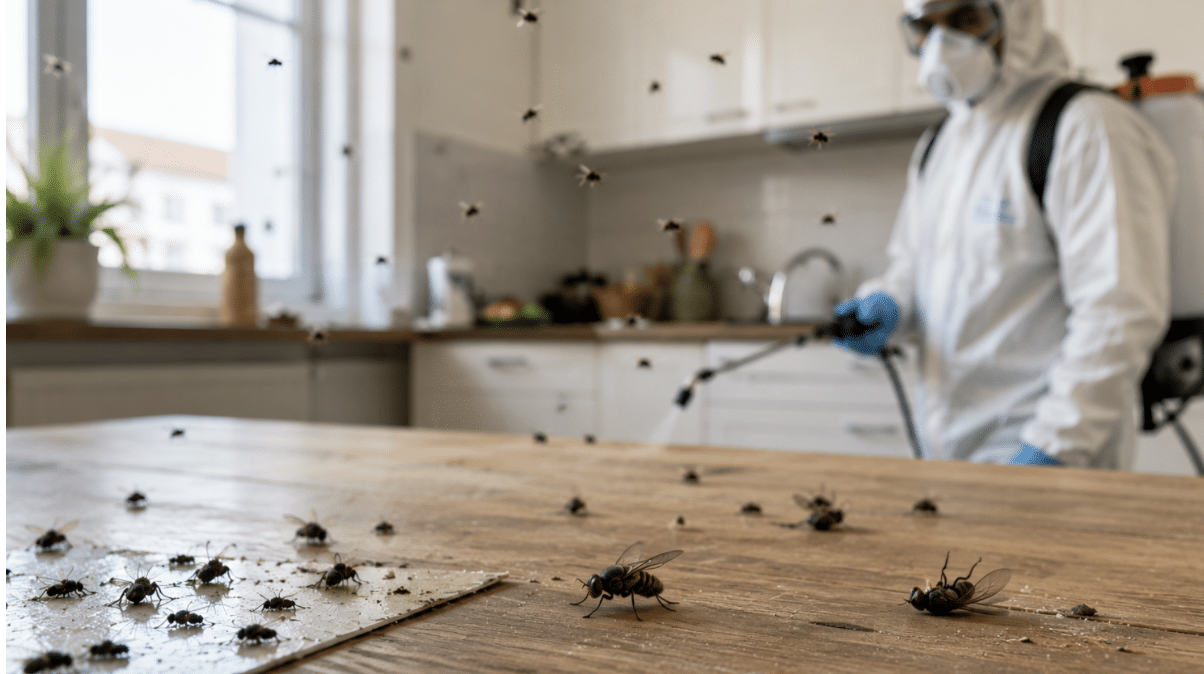
Aerosol sprays with pyrethrins give fast knockdown of the flies in a room and are labeled for indoor use around people and pets. Electric light traps and zappers handle adults safely too. Just know these are short-term — they kill what’s flying now but leave the larvae developing at the source, so they buy time rather than fix the problem.
Frequently Asked Questions
What preventative measures can I take to reduce the risk of fly infestations?
Keep food sealed, clean spills right away, and stay disciplined about garbage — sealed, closed, and emptied often. Pick up dog waste daily, seal exterior utility gaps, and repair torn screens. Most fly problems start with a breeding site, so denying them one is the whole game.
How can I differentiate between the various types of flies?
Size and color are the quick tells, and the table above lays them out. The short version: a metallic sheen means blow flies and a carcass nearby, tiny tan flies mean a kitchen or drain source, and sluggish flies gathering at the windows in cooler months are cluster flies.
How do weather conditions impact fly populations in Cleveland?
Heat and humidity accelerate breeding, so filth flies peak in July and August. Cluster flies run the opposite schedule — they appear indoors in fall and on warm winter and early-spring days as they move in and out of wall voids. Each season calls for a slightly different focus.
What should I do if my DIY methods do not eliminate the fly infestation?
If cleaning and traps don’t end it, you almost certainly have a breeding source you haven’t found — a hidden carcass, a drain, or a larval site out of sight. That’s the point to call us. We locate the source and treat it directly, which is the only thing that actually ends an infestation.
How can I maintain my fly control plan throughout the year?
Stay ahead of sanitation year-round, tighten the exterior in early fall against overwintering cluster flies, and lean harder on garbage and waste management through the summer peak. For homes with recurring summer flies, our May-through-August exterior program keeps the pressure off.
What role does sanitation play in controlling fly populations?
It’s everything. Flies breed in decaying organic matter — garbage, waste, fallen produce, carcasses — so cleanliness is the actual control method. It’s also why we’re upfront that fly treatments aren’t warrantied: if the conditions that fed the flies come back, so do the flies.
Conclusion
A severe fly problem in a Cleveland home almost always comes down to one hidden source — a dead animal in the chimney, a forgotten onion, a film-coated drain. Find it and remove it, and the flies go with it. We sort out which fly you have, track down what’s feeding it, and treat the source instead of just fogging the room. If the flies keep coming back, reach out to Lakewood Exterminating and we’ll find what’s behind it.