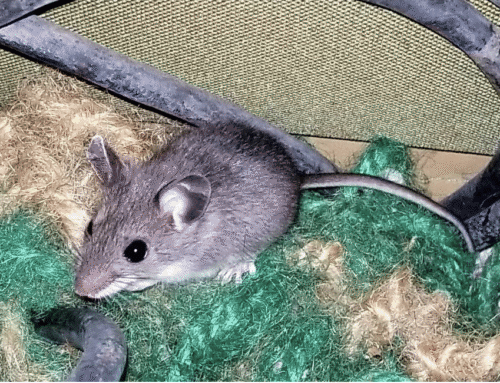
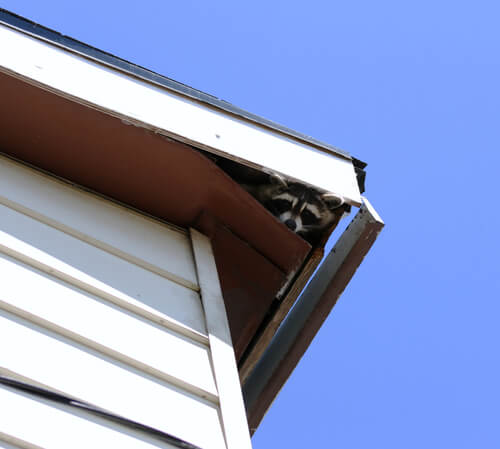
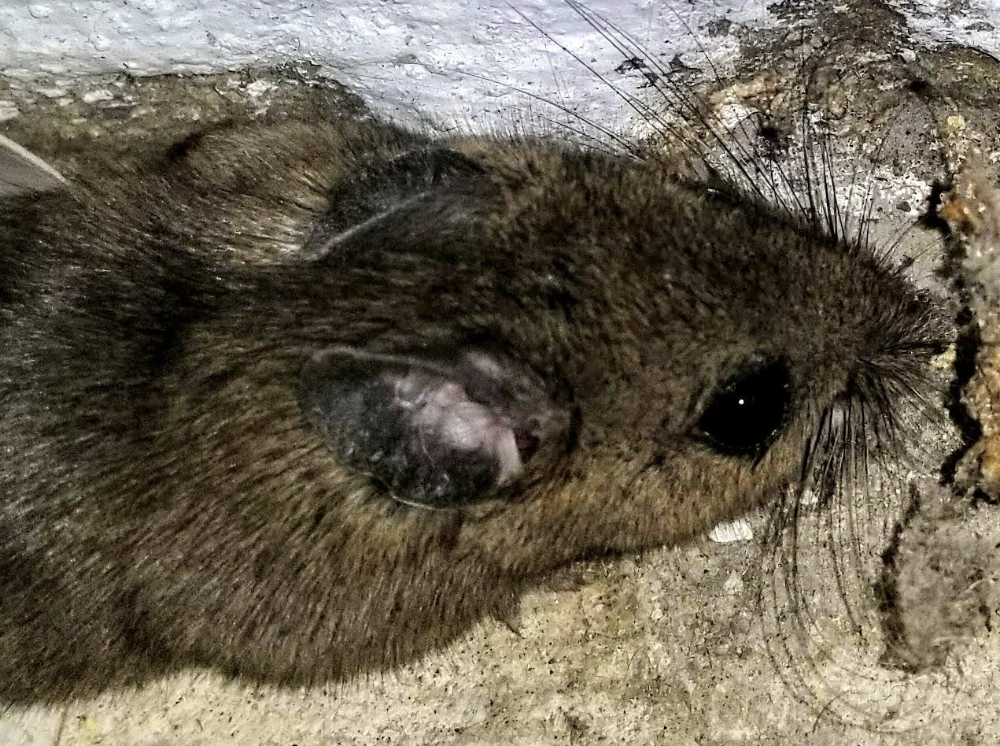
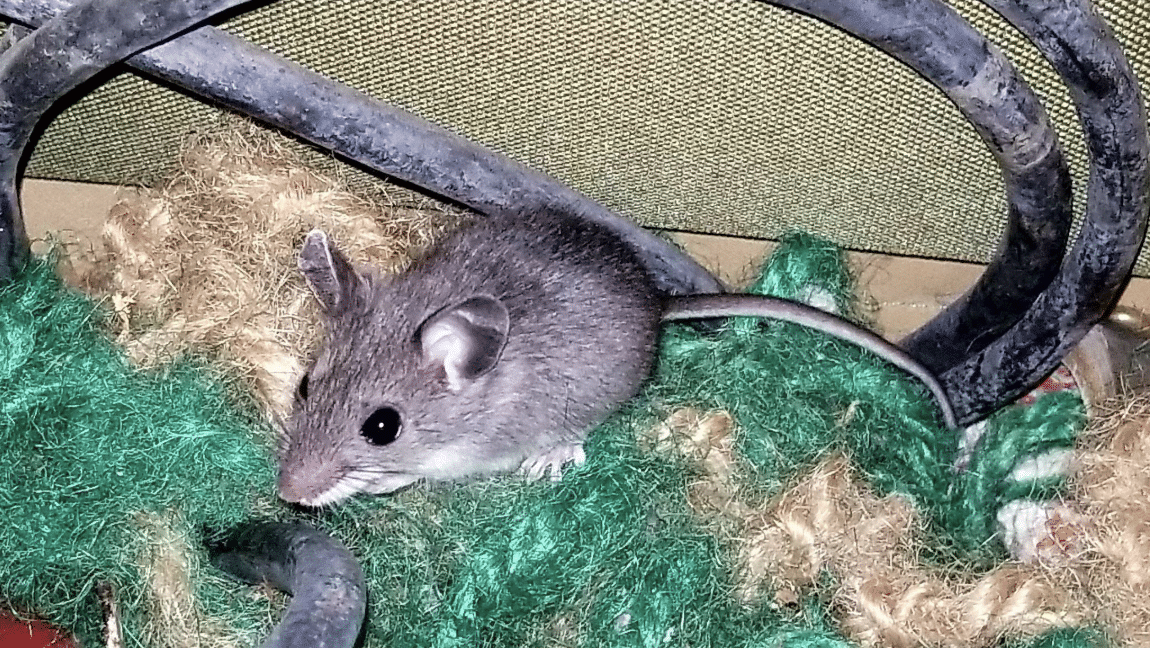
If you have mice in your Lakewood home, you almost certainly have an entry point on the outside of the house. That is the most important thing to understand. The mice inside are a symptom; the gap outside is the problem. Most homeowners get this backwards — they set traps inside, catch a few mice, and feel done, while new mice keep walking in through the same opening by the foundation.
This guide covers how we approach mouse problems on the west side of Cleveland: how to spot the signs early, what actually works for control, and why getting to the source beats setting more traps. We handle rodent work every week across Lakewood, Rocky River, Westlake, and the surrounding neighborhoods, and the homes follow the same patterns.
Step-by-Step Guide for Homeowners in Lakewood, Ohio, to Get Rid of Mice
Getting rid of mice for good takes a systematic approach. Here are the steps that matter, in the order they matter.
Identify the Problem
Start by confirming you have mice and where they are active. The clearest sign is droppings. Mouse droppings are about the size of a rice kernel — if yours look closer to a tic-tac, you are likely dealing with rats, which is a different service. Look near food, along walls, under sinks, behind appliances, and in the basement and attic. You may also find gnaw marks, shredded nesting material, and a musky smell where activity is concentrated.
Contact Professional Services
The inspection is where most of the value is. We are a small, locally owned team, and our owner trains every technician personally — you are not getting whoever a national call center sent out that week. Our pricing is fixed, so nobody is working on commission trying to upsell you. For mouse control in Lakewood and the surrounding cities, Lakewood Exterminating can help. Call (216) 466-2486 to request a quote.
Choose Between DIY and Professional Extermination
Plenty of homeowners try to handle mice themselves first. The issue is that store-bought traps only address the mice already inside — they do nothing about the opening letting new ones in. You can catch mouse after mouse and never get ahead of it. That cycle is what brings most of our customers to us. Professional work succeeds because it combines exterior exclusion — finding and sealing the way in — with interior control of whatever is left. Skip the first part and you are just managing the symptom.
Prevention Strategies
A few specific habits make your property less attractive and less accessible:
- Trim tree branches back at least six feet from the structure — mice use them to reach the roofline.
- Keep firewood and similar items away from exterior walls; stacked against the house, they give mice cover.
- Clean up fallen acorns and tree nuts in the yard and gutters, and skip bird feeders or move them well away from the house.
- Minimize low vegetation against the foundation, do not leave pet food in dishes, and wipe down food-prep surfaces.
Recommended Traps and Control Products
There is a lot of bad information about what to use. Here is what we actually run. Snap traps inside Trap-rite boxes do most of the work — the cardboard box keeps the trap away from kids and pets, makes the caught mouse easy to remove, and keeps the mess off your surfaces. In unfinished areas like basements and attics, we place rodenticide inside Tier-1 tamper-resistant bait stations, usually along the top of the foundation wall. For voids we cannot reach — crawlspaces, un-walkable attics, and wall cavities before we seal them — we use soft bait. The right mix depends on the home; some houses are best handled with traps only.
Glue traps are not part of how we work. They are inhumane, they fail in high-traffic areas, and they do nothing about why mice are getting in.
Follow-Up Care
Mouse work is not one-and-done — follow-up tells you whether the repairs worked. On our three-visit plan, the first follow-up comes one to two weeks after the initial service, long enough to control the mice that were inside. The third visit lands three to four weeks later, giving any mice still finding a way in time to show up. No activity on that last visit means the entry points are sealed. That confirmation is the point.
Consider Long-Term Solutions
The long-term fix is exclusion — sealing entry points so the structure stays closed. We rodent-proof using spray foam, Xcluder stainless steel fabric, and clear sealant. Pair that with the prevention habits above and a home stays quiet.
What Are the Common Signs of a Mice Infestation in Lakewood Homes?
Catching a mouse problem early makes it far easier to resolve. Watch for:
- Droppings and nesting materials — rice-kernel-sized droppings near food or along walls, plus shredded paper, fabric, or insulation gathered into a nest.
- Gnaw marks and tracks — chewed packaging, gnawed wood, and smudge marks along baseboards where mice run the same routes.
- Nighttime activity — scratching or scurrying in walls and ceilings after dark, and chewed-open food in the pantry.
How to Identify Mouse Droppings and Nesting Areas
Droppings are the most reliable evidence, and size tells you what you have: a mouse leaves droppings about the size of a rice kernel. To find the nest, check the hidden spots — under sinks, behind appliances, the backs of cabinets, and basement and attic corners — and look for stashes of shredded paper, fabric, or insulation. Mice also cache acorns and seeds in walls, which can draw secondary pests later.
Recognizing Noises and Damage Caused by Mice
Mice are most active at night, so the first thing many homeowners notice is sound — scratching or scurrying in walls or ceilings once the house goes quiet. The damage is the bigger concern. Mice gnaw constantly, including on electrical wiring, which is a genuine fire risk, along with insulation, wood, and stored belongings. The longer they are in, the more there is to deal with.
Which DIY Prevention Tips Help Prevent Mice Infestation in Ohio Homes?
The most effective things a homeowner can do come down to denying mice food, shelter, and access: store pantry items in airtight containers and keep pet food and bird seed away from the house; trim branches back six feet and clear vegetation off the foundation; and walk the exterior to note gaps, cracks, and openings near the foundation that need sealing.
What Natural Repellents and Best Mouse Traps Can Homeowners Use?
Peppermint oil and ultrasonic plug-ins get marketed hard as natural mouse solutions. We will be straight with you: they do not solve an infestation. Peppermint oil might bother a mouse for a day until it evaporates, and ultrasonic units do not drive established mice out. They sell because they are easy and chemical-free, but they do nothing about food, shelter, or entry points. If you are buying traps, snap traps are the reliable choice — set them along walls where you have seen droppings, trigger facing the wall, since mice travel the edges of a room rather than the open middle.
How to Seal Entry Points and Maintain a Mouse-Free Environment
Sealing the outside of the house is what ends a mouse problem for good:
- Inspect for gaps — a mouse fits through an opening the width of a dime. Check the foundation, utility line penetrations, vents, and where siding meets foundation.
- Use materials that last — we seal with spray foam, Xcluder stainless steel fabric, and clear sealant. Avoid plain steel wool; it rusts and breaks down, while stainless steel fabric holds.
- Be careful sealing inside — in a single-family home, plugging interior holes around kitchen cabinets usually will not stop mice and can backfire, forcing them into other parts of the house and complicating trapping. The repairs that matter happen outside. That is where we focus, and it is one of the things we get asked about most.
When Should You Consider Professional Mouse Removal Services in Lakewood, Ohio?
Bring in a professional when you are seeing or catching mice repeatedly and they keep coming back, when droppings show up in multiple areas, or when your own traps and products have not ended it. In every case, the reason DIY stalled is the same: the entry points outside have not been addressed. That is the part homeowners are not equipped to find and seal, and the part that actually fixes the problem.
What Does a Comprehensive Rodent Extermination Service Include?
Our mouse service is built around the fact that mice inside come from entry points outside. A complete service includes an interior inspection to locate activity, an exterior inspection to find the openings mice use, and a square foot of patchwork repairs at ground level on the first visit, sealed with spray foam, Xcluder fabric, and clear sealant. From there we place the right combination of snap traps and rodenticide, and document what we repaired and what else should be done right on the invoice. On the three-visit plan, follow-up visits maintain the traps and bait and confirm the repairs held.
A one-time visit is $235 plus tax with half-price follow-ups inside 60 days. The three-visit plan is $450 plus tax, carries a 90-day warranty from the initial service date, and confirms on the third visit that mice are no longer getting in.
How Does Lakewood Exterminating Customize Treatment Plans for Local Conditions?
No two homes let mice in the same way. An older Lakewood colonial has different weak spots than a newer Westlake build, and an attached garage, a porch, or a finished basement each changes the approach. We tailor the plan to your structure: where the entry points are, how the interior is laid out, and whether bait stations belong in an unfinished basement or soft bait belongs in an attic you cannot walk. The protocol stays the same — seal the outside, control the inside — but the specifics come from what we find at your address.
How Does Seasonal Mouse Behavior Affect Infestation Risks in Ohio?
Mouse pressure is seasonal in Northeast Ohio. As temperatures drop in fall, mice look for somewhere warm to nest, and a heated house is exactly what they want. The small gaps that went unnoticed all summer become doorways. Sealing the exterior before the cold pushes mice indoors is far easier than trapping them out once they have settled in.
What Are the Peak Seasons for Mouse Activity in Lakewood?
Fall and winter are the peak. As the weather turns, mice move from yards and fields toward the warmth and food inside, and that is when our calls climb. If you plan to inspect and seal your home, late summer to early fall is the window.
How to Adjust Prevention and Control Strategies Throughout the Year
Mouse prevention is not the same job in January as in July. Going into fall, step up vigilance and get the exterior sealed before the first cold snap. Through the rest of the year, walk the outside of the home periodically to catch new gaps, and keep up the prevention habits — food storage, trimmed vegetation, no firewood against the wall — so the property stays unattractive to mice.
What Are the Typical Costs and Value of Professional Mouse Control Services in Lakewood?
The value over DIY is in what the service buys you: a real exterior inspection, included patchwork repairs that address the actual cause, control products placed correctly, and — on the three-visit plan — a warranty and confirmation the problem is solved. Stopping chewed wires and breaking the cycle of new mice walking in is worth more than the cost of the visit.
How Is Pricing Determined for Rodent Extermination in the Cleveland Area?
Our mouse pricing is fixed and published, so you know the cost before we arrive: $235 for the single visit, $450 for the three-visit plan, plus tax. Properties outside our standard service area and additional living units carry a set add-on. Larger repairs beyond the included patchwork, anything needing an extension ladder, or vent screening are quoted separately and itemized. We do not work on commission, and there are no surprise upsells.
What Guarantees and Warranties Do Professional Services Offer?
Our three-visit mouse plan comes with a 90-day warranty from the initial service date. The warranty depends on the recommended repairs getting completed — if mice are still being let in through gaps that were never sealed, no control program keeps them out. That is why we document every repair recommendation and why the third visit exists: to confirm the structure is closed and the activity has stopped. One honest note: no company can guarantee you will never see a rodent. What we can do is find the way in, seal it, and control what is left.
The Bottom Line
Mice inside your home mean there is a way in from outside. Trapping alone treats the symptom; sealing the entry points treats the cause. Find the droppings, cut off food and shelter, set proper traps, and get the exterior closed up. When it is past what you can handle on your own, our team handles mice control Lakewood Ohio the right way: inspect, repair, control, and confirm. Take care of it before fall, and you will spend the winter with a quiet house.