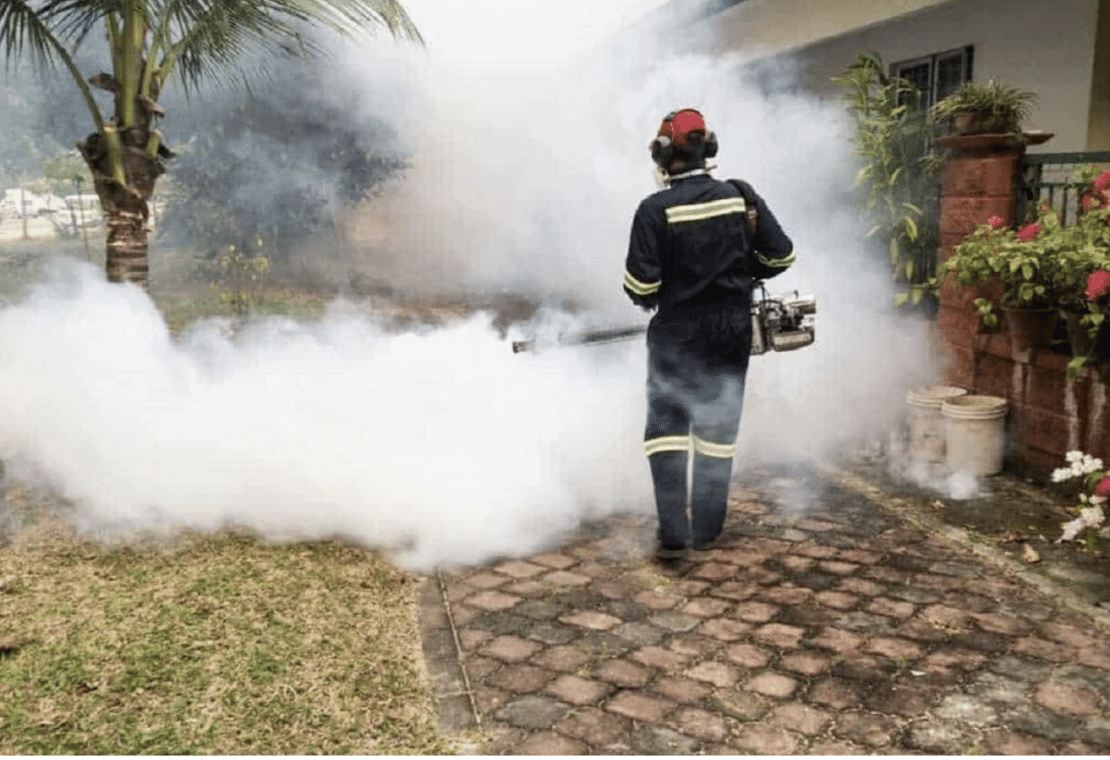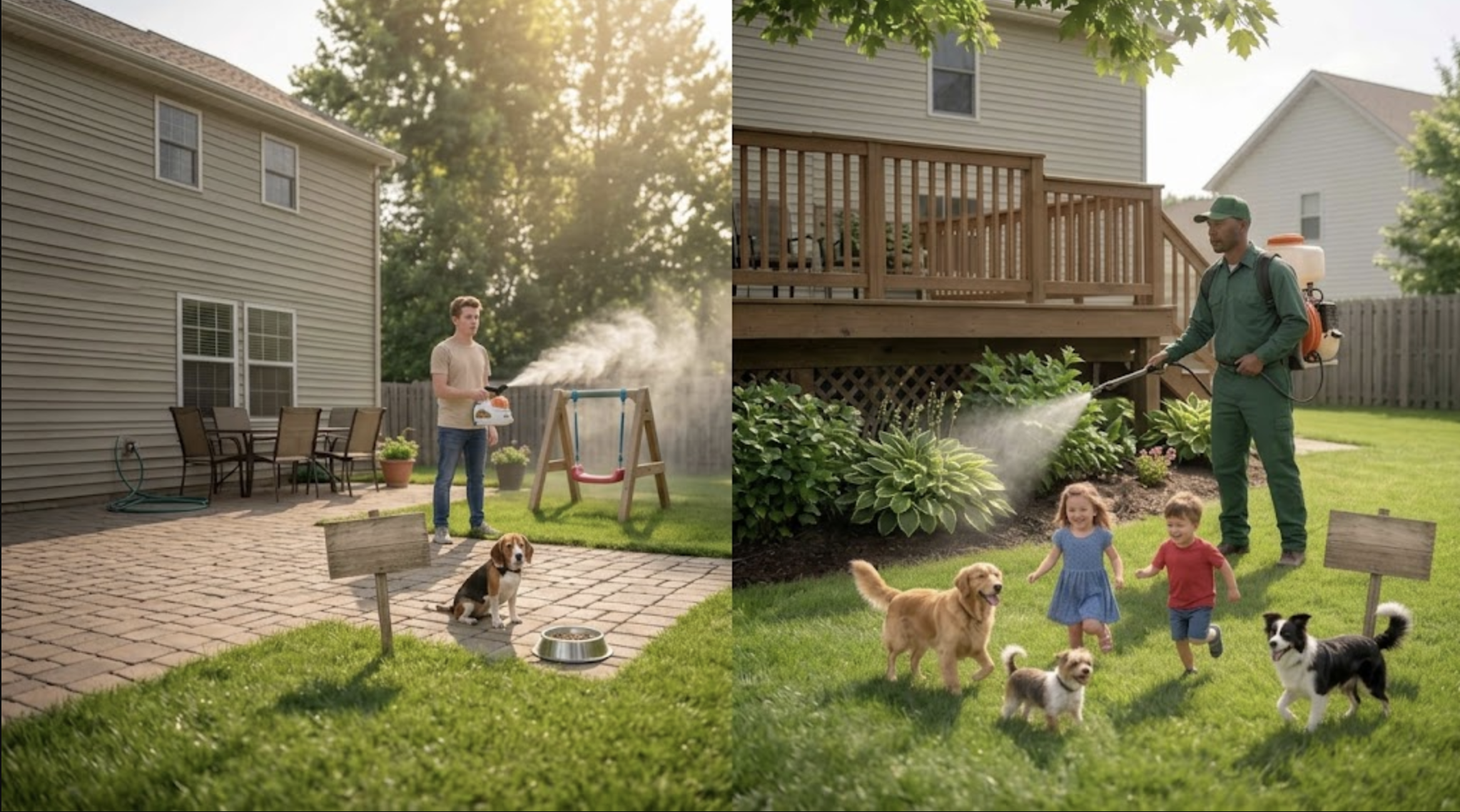
Professional mosquito control targets breeding sites and shaded resting spots with measured applications, then gives you a re-entry window before kids and pets go back outside. Store-bought foggers do the opposite: an uncalibrated cloud across the whole yard, settling on grass, patio furniture, and toys, applied by someone who has no way to know how much product actually went down.
West Nile virus in people and heartworm in dogs are the two mosquito-borne risks that matter in a Cleveland backyard, and both argue for controlled treatment over guesswork. A licensed applicator works to the label rate and tells you exactly how long to stay off the grass. That’s the whole difference.
Key Takeaways
- Professional applications use EPA-registered products at label rates, applied by licensed technicians with calibrated equipment.
- Everyone stays out of the treated area until the product dries, which typically runs from 45 minutes to a few hours depending on the application and the weather. Anyone promising immediate re-entry isn’t reading the label.
- Store-bought foggers are applied without measuring the yard or checking the re-entry interval, which is where most household exposure happens.
- Lakewood Exterminating treats standing water, foliage, and shaded harborage instead of blanketing the lawn, and sends the prep list before the visit.
Why Does Mosquito Safety Worry Parents?
Health risks drive most of the worry. West Nile virus shows up in Ohio mosquito populations most summers, and heartworm is a year-round concern for dogs. A backyard nuisance turns into a family health question fast.
That’s also why homeowners on Cleveland’s West Side stall before scheduling treatment. You want the yard usable without trading one problem for another. Asking what goes down, at what rate, and how long before the kids go back out isn’t overreacting. Any technician worth hiring answers all three without hedging.
Your backyard exists for laughter, not itching. Kids should run barefoot across the lawn. Dogs should nap in the shade without a swarm circling overhead. The moment mosquitoes move in, that freedom disappears, and the worry about what’s safe to spray around your family moves in right behind them.
Are mosquitoes really dangerous to my dog?
Yes. Mosquito bites transmit heartworm larvae directly into a dog’s bloodstream, and untreated infections damage the heart and lungs. Reducing the mosquito population around the yard supports your vet’s prevention program rather than replacing it, which is what makes pet-friendly mosquito treatment worth doing properly instead of quickly.
What makes a treatment safe for children?
Three things, in this order: the right product at the label rate, application aimed at where mosquitoes actually are rather than across the whole lawn, and a re-entry window that everyone respects. Child-safe pest control is less about the chemistry than about who is holding the sprayer and whether they follow what the label says. That’s where DIY mosquito spray risks originate, since over-the-counter products come with the same legal instructions and almost nobody reads them.
What Risks Do DIY Mosquito Sprays Pose?
Store-bought foggers and sprays carry real drawbacks despite bold label promises. Marketing suggests these products target mosquitoes alone, but the material doesn’t stop there. It settles on grass, patio furniture, and toys, everywhere your kids and pets touch. That gap between promise and reality is one of the biggest DIY mosquito spray risks homeowners overlook.
A backyard treated carelessly undoes the relaxation you’re chasing. Add a poorly applied spray to an already itchy evening and you’ve swapped one problem for residue on the surfaces your family uses most.
Are DIY Mosquito Sprays Safe for Pets?
Not reliably, and that’s the part homeowners miss. Dogs live at ground level, rolling in the grass and sniffing treated foliage, so their contact with a treated surface is nothing like yours. The exposure question comes down to whether the product went down at the labeled rate and whether anyone waited for it to dry. In a driveway mix-and-spray, neither is knowable.
Why Does Mosquito Control Matter for Family Safety?
West Nile virus is transmitted by mosquito bite and does circulate in Ohio, which makes population control a health matter and not only a comfort one. That’s exactly why professional mosquito control services exist — choosing pet-friendly mosquito treatment and child-safe pest control methods matters more than reaching for the nearest hardware-store fogger.
Common DIY missteps include:
- Spraying too close to play areas, sandboxes, or pet bowls
- Skipping the label’s re-entry interval for kids and animals
- Applying in wind, pushing product onto patios, decks, and the neighbor’s yard
- Assuming “natural” labeling means no precautions apply
- Treating the lawn while leaving the standing water that’s producing the mosquitoes
How Do Professional Treatments Differ From Foggers?
A fogger blankets whatever is in its path. A professional treatment goes after the two places mosquitoes actually are: the water they breed in and the shade they rest in during the day.
Here’s what that looks like on a west-side property. Standing water that can’t be drained gets an insect growth regulator, so larvae never reach adulthood. A backpack mister puts product into foliage, shrubs, trees under twenty feet, and the shaded pockets under decks, porches, and soffits where adults wait out the heat. Along a shared property line we switch to a standard sprayer to hold down drift. Where container breeders are the problem, In2Care stations go into shaded areas and get serviced every three to four weeks. Organic product options are available on a three-week interval.
None of that resembles a rental-fogger cloud drifting over a kiddie pool. It’s less product, placed where it does something.
Are Foggers Riskier Than Professional Applications?
Yes, and the reason is control rather than chemistry. A fogger disperses widely and depends entirely on the operator’s technique, so over-application and uneven coverage happen easily in a backyard. A licensed applicator works from the label, knows the treatable square footage, and adjusts for wind before starting.
A plan built on child-safe pest control principles also accounts for where your kids play and where your pets roam, not just where mosquitoes breed. We’re a four-person shop and I train every technician myself, so the person deciding how close to get to the swing set has been doing it on west-side yards for years, not reading it off a script.
The difference shows up in results, not just method:
- Foggers: broad coverage, no targeting, highest exposure near play areas
- Professional treatments: growth regulator on water, misting into harborage, reduced-drift application at property lines
- Local knowledge: treatment shaped by which yards on your street hold water and when the population climbs
If mosquitoes are cutting outdoor time short at your home, contact Lakewood Exterminating to talk through a treatment plan for your property.
Is Spraying Really Safe for Kids and Pets?
It’s manageable when the application follows the label and the prep gets done, and I’d rather give you that answer than a cleaner one. Before a misting, the yard needs to be clear: pet belongings, toys, and lawn chairs out; grills and tables covered or moved; fish ponds covered; sprinklers shut off. Everyone stays out of the treated area until the product has dried, which generally runs from 45 minutes to a few hours depending on conditions.
Mosquito control has become a normal part of summer across Cleveland’s West Side, and for good reason. West Nile virus and heartworm don’t stay confined to swampy areas. They show up in ordinary backyards where kids play barefoot and dogs chase tennis balls. A pet-friendly [mosquito treatment](https://lakewoodexterminating.com/services/mosquito-control/) applied by a trained technician targets the pests, not your family.
Why does timing matter so much for backyard treatments?
Drying time is the difference between a treated yard and a wet one. A responsible provider tells you the re-entry window before the visit, not after, and doesn’t shorten it to make the service sound more convenient than it is.
What happens when homeowners panic and DIY?
Mosquito problems rarely feel minor. They bring itchy bites, real health risk, and a strong urge to act tonight. That urgency is exactly where DIY mosquito spray risks creep in: over-application, wrong dilution ratios, and spraying the areas where pets nap and kids build forts, all in the same afternoon.
| Factor | DIY Store-Bought Spray | Professional Treatment |
|---|---|---|
| Dosage control | Mixed by eye, applied without measuring the yard | Label rate, calibrated equipment, licensed applicator |
| Application timing | Whenever the yard gets bad | Scheduled, weather-aware, drift-conscious at property lines |
| Re-entry | Rarely read off the label | Stated before the visit: stay out until dry |
| Prep instructions | None | Written list of what to clear, cover, and shut off |
How Should West Side Families Choose a Provider?
Provider selection comes down to three questions: local experience, what actually gets applied, and whether they’ll tell you the re-entry interval without being asked. A company guessing costs you time, money, and repeat exposure for your kids and pets. One that walks the property first gets it right.
Lakewood Exterminating works out of Lakewood and serves the west side. We’re four people, I train every technician personally, and nobody here works on commission, so the plan for your yard reflects what the yard needs rather than what pays best. That’s a different proposition from a call center reading off a script.
What makes a mosquito treatment plan trustworthy?
Trustworthy providers reject the one-size-fits-all spray. They build the plan around your yard, your kids’ play areas, and where your pets spend their time outdoors.
A pet-friendly mosquito treatment plan should target standing water first, then shaded resting spots, then the property-line vegetation where pressure comes from. Generic blanket treatments mean more callbacks and more product on your lawn over the season, which is the opposite of what a family with a dog wants.
Should you trust DIY mosquito sprays instead?
DIY mosquito spray risks come down to incorrect concentration, missed breeding sites, and ignored re-entry intervals near play equipment and pet bowls. Professional child-safe pest control planning removes the guesswork from all three.
Ready to protect your West Side yard the right way? Request a quote and we’ll walk the property, show you what’s producing mosquitoes, and hand you the prep list before anything gets treated.
FAQ
Is professional mosquito control safer than DIY foggers for kids and pets?
It carries less risk, because the product goes down at the label rate through calibrated equipment and comes with a stated re-entry window. DIY foggers blanket the yard with an unmeasured amount that settles on grass, furniture, and toys.
How long do families stay out of the yard after a professional mosquito treatment?
Until the product has dried, generally 45 minutes to a few hours depending on the application and the weather. We tell you the window before the visit. Any company promising you can walk back out immediately is not reading its own label.
Why do DIY mosquito sprays pose risks to pets?
Dogs live at ground level and make far more contact with treated grass and foliage than people do. Consumer applications are mixed by eye, applied without measuring the yard, and rarely paired with a respected drying period, which is where the exposure comes from.
Conclusion
The safety question isn’t really about professional versus DIY products. It’s about whether anyone measured the yard, applied at the label rate, aimed at the water and the shade instead of the whole lawn, and gave you an honest drying time. A licensed applicator does all four as a matter of course. A rental fogger does none of them, and your kids and your dog use that grass more than you do.