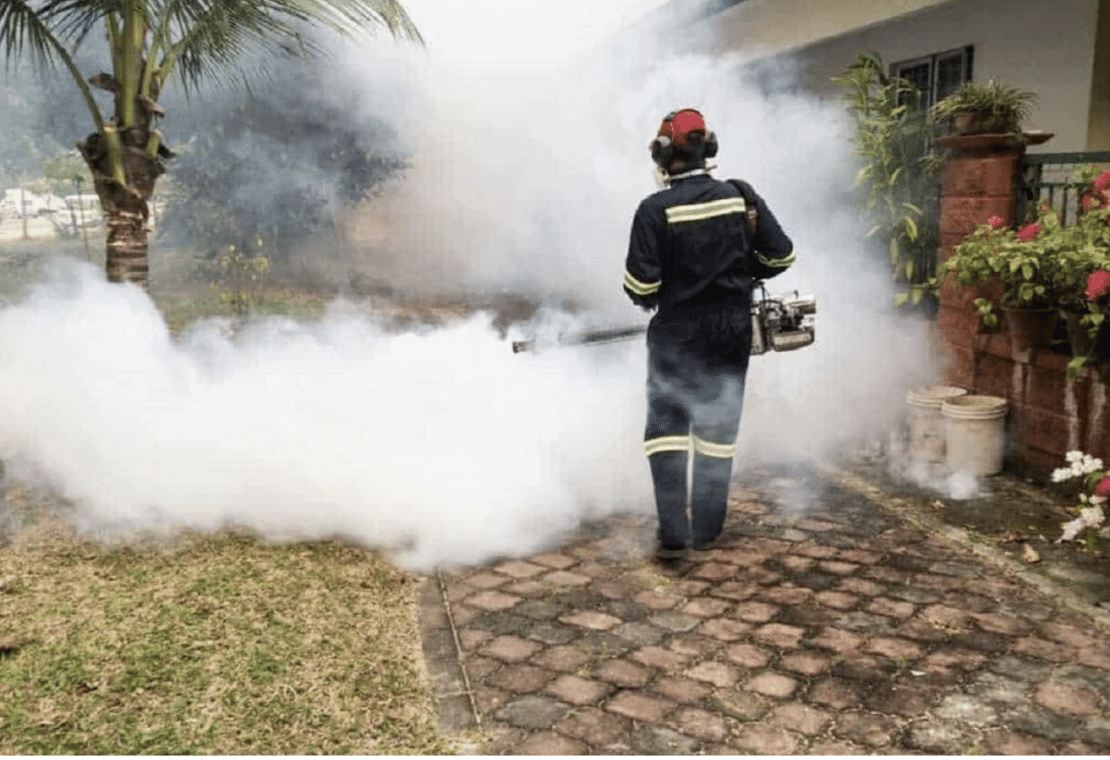
Mosquito breeding spots in Lakewood, OH include clogged gutters, birdbaths, flowerpot saucers, and low-lying yard areas that collect standing water after rain. Removing those water sources cuts the population further than any spray does on its own. Lakewood Exterminating’s licensed technicians handle what’s left through our Mosquito Control Service, which pairs backpack misting with In2Care stations for container breeders. We walk the property with you first, so you know which features on your lot are producing the mosquitoes before anything gets treated.
Key Takeaways
- Mosquito season in our area runs May 1 through October 15, and July through September is when misting earns its keep.
- Standing water drives everything. Water we can’t drain gets treated with an insect growth regulator so larvae never reach adulthood.
- Misting runs $80 for lots up to a half acre and $125 up to an acre, with $20 off per service for quarterly maintenance customers.
- We’re a four-person, owner-trained crew serving Cleveland’s west side: Lakewood, Rocky River, Fairview Park, Westpark, Bay Village, Westlake, Ohio City, Old Brooklyn, and Brookpark.
Why Do Mosquito Breeding Spots Multiply Here?
Recurring mosquito problems trace back to the same yard features season after season across Lakewood properties. Standing water and overgrown vegetation create ideal conditions, and once a yard starts producing mosquitoes, it keeps producing them until something physically changes. Mosquito season here runs May 1 through October 15. That’s five and a half months of evenings on the patio riding on a handful of wet spots.
We operate out of Lakewood, so we see the same neighborhood patterns year after year. Crew size has nothing to do with it. We’re a four-person shop, and I train every technician myself, so whoever walks your property already knows which streets hold water after a Lake Erie storm and which yards call back every summer. The national outfits rotate new techs through each season. Ours stay.
Two features show up constantly:
- Clogged gutter water sitting in packed leaf debris, feeding larvae directly above your front door
- A shaded shrub line along fences and foundations, where humidity stays high and sunlight rarely reaches the soil
What Makes a Yard a Mosquito Magnet?
Moisture and shade working together. Any spot that holds water long enough for larvae to develop, combined with cover from direct sun, gives mosquitoes everything they need to breed undisturbed.
Effective treatment targets those exact habitats instead of blanket-spraying the whole property. Open, sunlit turf dries fast and produces almost nothing, so soaking it runs up a chemical bill and little else. We walk you through why your particular yard holds mosquitoes, then tell you which features need attention first, including the ones you can fix yourself for free.
Where Does Standing Water Collect Outside?
Standing water gathers in the tight, shaded corners of your Lakewood yard that rarely see direct sun or a rake. Leaf litter along fence lines, gaps in woodpiles, and low spots in ground cover all trap moisture long after a Lake Erie rainstorm passes through. Add the containers nobody thinks of as containers: flowerpot saucers, a sagging tarp, a wheelbarrow left upright. These pockets create prime mosquito harborage areas where females lay eggs a few steps from your deck.
Empty anything holding water once a week. That’s the interval we give every mosquito customer, and it does more than most people expect. Water that can’t be dumped, like a low spot that refills every rain or a decorative pond, gets treated with an insect growth regulator during service so the larvae in it never mature.
Gutters deserve particular attention on older Lakewood homes with mature tree canopies. Clogged gutter water sits directly above your foundation, siding, and any windows you leave open on warm evenings. A technician trained to check these overlooked features spots pooling before it becomes a nursery, which makes Pest Control in Cleveland part of preventing mosquito breeding rather than just reacting to it.
What Yard Features Attract the Most Mosquitoes?
Dense, overgrown plantings hold moisture far longer than open lawn space. A shaded shrub line along a property border blocks airflow and sunlight, keeping soil and leaf debris damp for days. Woodpiles, decorative ground cover, and crevices near patios behave the same way, giving mosquitoes shelter from heat and from anything that would otherwise eat them.
Can Treatments Reach These Hidden Spots?
Yes, though not through pressure. It comes down to equipment and targeting. A mosquito backpack mister carries product into foliage and canopy where adults rest during the day. Along property lines we switch to a standard backpack sprayer, which cuts drift onto your neighbor’s yard. We treat trees below twenty feet, shrubs, foliage, under decks and porches, soffits and entryways where air doesn’t move, and shaded areas generally. Standing water gets the growth regulator. Organic product options are available and go down on a three-week interval.
Common outdoor water traps include:
- Clogged or sagging gutters and downspouts
- Birdbaths, flowerpot saucers, and containers left upright
- Leaf piles pressed against fences or foundations
- Woodpiles and stacked yard debris
- Dense shrub borders with poor airflow
- Low spots in ground cover or mulch beds
What Makes the Shaded Shrub Line Risky?
Dense shrubbery bordering your Lakewood yard creates ideal mosquito harborage areas, the cool, humid pockets where mosquitoes rest between feedings. Wherever a wood line or dense border meets your lawn, mosquitoes and ticks concentrate more heavily than anywhere else on the property. Skip that border and you’ve left the best real estate on the lot untouched.
Shade matters more than most homeowners realize. Sunlit lawns dry out within hours, but a shaded shrub line stays damp well past that. Ticks compound the problem along the same edge, and they turn active once ground temperature passes 45 degrees, which in Cleveland arrives well before anyone thinks about yard pests.
Do shrub lines need different treatment than open lawn?
Yes. We target harborage zones directly rather than covering the yard evenly, so the shrub line, the fence border, and the shaded strip behind the garage get the attention while open turf gets very little. Properties with heavy cover along a shared line need one extra step: let the neighbors know we’re treating. We can notify them ahead of future visits if you put the request in writing.
Is treating shrubs near my house safe for kids and pets?
It’s safe when the prep gets done, and we’d rather tell you that plainly than sell you a story. Before we mist, the yard needs to be clear: pet belongings, toys, and lawn chairs out; grills and tables covered or moved; fish ponds covered; sprinklers shut off until the product dries. Everyone stays out of the treated area until it’s dry. That isn’t fine print, it’s how the products are labeled.
Two things back up shrub-line treatment here:
- Fixed pricing. A dense, overgrown border doesn’t trigger an upsell or a commissioned add-on, because nobody on our crew works on commission.
- An honest ceiling. Knocking out 100% of the population isn’t realistic, and we don’t promise you’ll never get bitten. You’ll hear what the service can do and what you need to handle on your end.
Your shrub line deserves the same scrutiny as your clogged gutter water problem spots. Both are pest magnets hiding in plain sight.
Why Choose Professional Treatment Over DIY?
Professional applications reach breeding and resting sites that store-bought sprays don’t. Homeowners relying on hardware-store products treat the mosquitoes they can see, leaving mosquito harborage areas untouched and populations rebounding within days. A licensed technician evaluates the whole property, water sources first.
Why does DIY spray fail to control mosquitoes long-term?
Consumer sprays kill on contact and offer little after that. Breeding sites like clogged gutter water and damp mulch beds keep producing new adults long after the can is empty, which is why our applications target habitat and larvae rather than just the insects flying past your face.
Equipment is the other half of it. A mister moves product into a canopy in a way a pump sprayer can’t, and growth regulators for standing water aren’t sold in consumer aisles.
| Approach | Coverage | Time Investment | Repeat Risk |
|---|---|---|---|
| DIY spray | Surface-level, visible areas only | Weekends, ongoing | High |
| Professional treatment | Whole property, including standing water and shaded harborage | Scheduled visit every 3–4 weeks in season | Low |
Is professional treatment worth it for a small yard?
Yard size doesn’t change where mosquitoes hide. Compact Lakewood lots still have downspouts, planters, and shaded corners that trap moisture, and those spots need the same targeted attention as an acre in Westlake.
What Should Lakewood Homeowners Do Next?
Start with the free work. After the next good rain, walk the yard and note anything still holding water two days later. That’s your list, and clearing it changes your season more than any single application will.
- Empty containers, saucers, and anything else holding water once a week
- Keep gutters clear and running freely
- Bag and remove leaf litter instead of piling it against the fence
- Keep the lawn mowed
- Thin dense vegetation growing tight against the house
Then bring us in for the habitat you can’t drain or reach. Request a quote and we’ll walk the property before recommending anything.
How does pricing work for mosquito treatment?
Misting is $80 for lots up to a half acre and $125 for lots up to an acre. Customers on our quarterly maintenance plan take $20 off each service. Service repeats every three to four weeks through the season or runs one-time on request. If container breeders like Asian tiger mosquitoes are the issue, In2Care stations cost $75 per bucket to install plus $35 per bucket monthly, with a two-bucket minimum. Most homes need two or three. You get the number up front, and there’s no commissioned salesperson working an upsell on the way out.
What if the treatment doesn’t solve the problem?
We tell you the ceiling before you pay. Even with good control, reducing the population by 100% isn’t realistic, and we don’t guarantee you won’t get bitten. What we do watch is the count between visits. More than 15 to 20 bites between services tells us the interval is too long for your property, and we tighten the schedule rather than selling you a different program. If the yard has a water source we haven’t found yet, that’s where we go back and look.
FAQ
What are the most common mosquito breeding spots in Lakewood, OH?
Clogged gutters, birdbaths, flowerpot saucers, and low-lying yard areas that collect standing water after rain top the list. Shaded shrub lines and leaf-filled fence corners hold moisture and shelter adults between feedings.
Why do mosquito problems keep coming back in the same yards?
The water source never left. Standing water and overgrown vegetation let a population re-establish within days of a treatment, which is why source reduction on your end and habitat treatment on ours work together rather than as alternatives.
How does Lakewood Exterminating treat mosquito harborage areas?
We inspect and treat standing water with an insect growth regulator, then mist foliage, shrubs, trees below twenty feet, and the shaded spots under decks, porches, and soffits. Along property lines we use a standard sprayer to hold down drift. For container-breeding species, In2Care stations go in shaded areas of the yard and get maintained every three to four weeks.
Conclusion
Mosquitoes are a water problem before they’re a spray problem. The yards that stay comfortable through August aren’t the ones getting the heaviest applications. They’re the ones where somebody dumped the saucers, cleared the gutters, and let a technician treat the water and shade that couldn’t be removed. From May through mid-October, we’re in Lakewood yards every week.