We treat mosquitoes in Rocky River and Westlake out of our shop in Lakewood, and a good share of those calls come from homeowners who already paid somebody else for a season that did not work. Mosquito control is one of the easiest services in this industry to sell and one of the easiest to do badly. Below is what separates a program that hands your yard back to you from one that just parks a truck in your driveway once a month.
Key Takeaways
- Mosquito season in Northeast Ohio runs May 1 through October 15. A company selling you year-round mosquito treatment is selling you several months of nothing.
- Mosquitoes breed in standing water. A provider that is not inspecting for containers, gutters, and leaf litter is treating the symptom and leaving the source alone.
- There are two real treatment approaches: In2Care bucket stations for container-breeding species, and misting for adults resting in shade. Some yards want both.
- Pricing should be published before anyone walks your property. Ours is $80 for lots up to a half-acre and $125 for lots up to an acre.
- No honest company guarantees you will not get bitten. Ask what happens if bites continue instead. That answer tells you far more than a guarantee does.
Why Do Rocky River and Westlake Need Mosquito Control?
Rocky River and Westlake give mosquitoes the two things they want most: shade and water that sits. The river valley and the Metroparks reservation put mature tree cover over a lot of these properties, and Westlake’s wooded lots do the same on the other side of the service area. Shade holds humidity and slows evaporation. Water that would burn off in two days in an open yard will sit for a week under a canopy.
That matters because of how these insects reproduce. Females lay eggs on or beside standing water, and both the larval and pupal stages happen in that water. No standing water, no next generation. The adults biting you on the deck at seven in the evening hatched within a couple hundred feet of where you are standing.
Season here is short and predictable. We run mosquito work from May 1 to October 15, and pressure peaks from July into September. Anything outside that window is not a mosquito problem.
What Makes Mosquito Pressure Different in This Area?
It is not elevation and it is not the river itself. It is containers. Corrugated downspout extensions, saucers under planters, kids’ toys, wheelbarrows, tarps, birdbaths, trash can lids, and low spots that hold water after a storm. Some species need almost nothing. A clogged gutter running the length of a house is a nursery.
The second half is resting habitat. Adult mosquitoes spend the day out of the sun and out of the wind: under decks and porches, inside dense vegetation pushed up against the foundation, in leaf litter, in soffits and entryways where air does not move. A yard with both a water source and heavy shade will hold a population all season no matter how often the lawn gets mowed.
That combination is what our mosquito control service is built around. We go after the breeding sites first and the resting sites second, because killing adults without touching the water they came from buys you about three weeks.
Do I Need Professional Treatment or Can I Handle It Myself?
Part of this you can do yourself, and you should. Dump anything holding water once a week. Keep gutters clear and running freely. Bag and haul off leaf litter. Mow. Cut back dense vegetation crowding the building. None of that costs a dollar and all of it works.
Where homeowner effort runs out is coverage. A hose-end sprayer does not reach the underside of shrub foliage, the joists under a deck, or a soffit twelve feet up, and those are exactly where adults spend daylight hours. It also does nothing to larvae already in the water.
When you are comparing companies, listen for these three things:
- They inspect for standing water and treat what cannot be dumped, rather than spraying foliage and leaving.
- They treat shaded resting sites specifically, not the open lawn where mosquitoes are not sitting anyway.
- They tell you the season ends in October instead of selling you twelve months.
What Does a Mosquito Control Service Include?
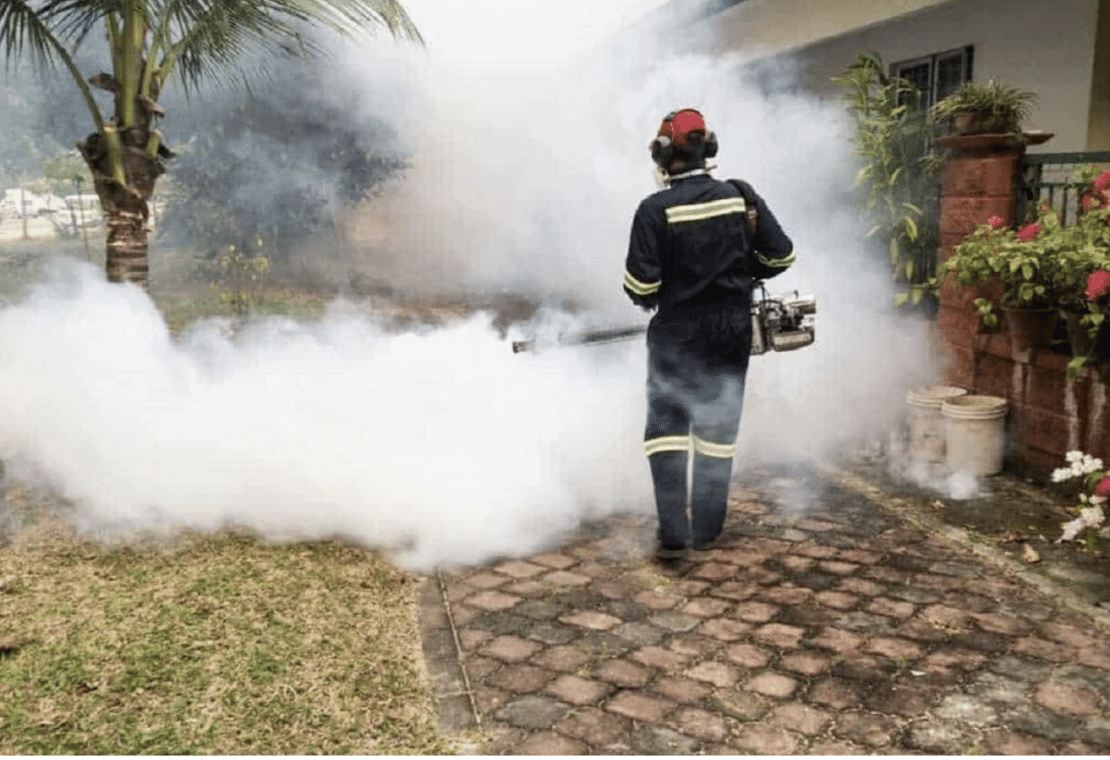
A misting visit starts with a walk of the property. We check that no unexpected people or pets are outside, and that loose items are covered or put away. Then we inspect for standing water and treat whatever cannot simply be dumped with an insect growth regulator, a product that mimics the hormones controlling molting so larvae never develop into biting adults.
From there we treat the places adults actually rest. Trees below twenty feet, foliage, shrubs, under decks and porches, soffits and entranceways with little air movement, and other shaded areas. A mosquito backpack mister handles the foliage. Near property lines we switch to a regular backpack sprayer, which reduces drift onto the neighbor’s yard. Organic products are available if you want them, applied on a three-week interval.
What should be included before treatment begins?
You should know the price before anything is scheduled. Mosquito work prices off lot size, so there is no reason for a quote to be a mystery or for anyone to need a sales visit to produce one.
You should also get the preparation list up front. For a misting service: remove pet belongings, toys, and lawn chairs from the yard; cover or remove food-contact surfaces such as tables and grills; cover fish ponds; turn off sprinklers and leave them off until the product has dried; and stay out of the treated area until the spray dries. If there is treatable vegetation along a property line, let your neighbors know we are coming.
How do you know who is actually showing up?
Ask who trains the technicians and how long they have been there. We are a four-person shop and our owner trains every technician personally, which is why the work stays consistent visit to visit. You are not getting a subcontractor, a rotating crew, or somebody three weeks into the job reading a route sheet. Two of our technicians are women, which matters to a fair number of customers and is worth asking any company about.
What Are Your Mosquito Treatment Options?
There are two programs, and they solve different problems.
In2Care stations target container-breeding mosquitoes, including the Asian tiger mosquito. We place two to three buckets in well-shaded spots on the property, filled with water and fitted with a floating mesh gauze. Biological control agents are electrostatically charged onto that gauze. Every three to four weeks we come back, adjust the water level, and install fresh gauze. Installation is $75 per bucket and maintenance is $35 per bucket per month, with a two-bucket minimum. Most homes land at two or three.
Misting targets the adults already flying. July through September is the strongest window for it. Service recurs every three to four weeks, or on request when you have something specific coming up. Pricing is $80 for lots up to a half-acre and $125 for lots up to an acre. If you are already on our quarterly pest control plan, take $20 off each mosquito service.
Why every three to four weeks?
Because of how long the product lasts. The average lifespan of a residual pesticide application is about twenty days, and most of the products we use cannot legally be reapplied inside a two to four week window. That is the whole explanation for the interval. Anyone promising you a single treatment that holds all summer is either misreading the label or counting on you not to.
What Mosquito Control Can and Can’t Do
Here is the part most companies will not put in writing. Even with the best control effort, reducing a mosquito population by one hundred percent may not be possible, and we do not guarantee that bites will not occur. Mosquitoes fly, and your neighbor’s clogged gutter is not on our service ticket. Any company handing you a money-back guarantee against bites is selling a promise it cannot keep.
What we give you instead is a benchmark you can measure. If you are taking more than fifteen to twenty bites between services, that is the signal to tighten the schedule, and we will. That number gives you something concrete to hold us to, which a guarantee never does.
One thing worth knowing up front: mosquitoes are not a covered pest on our quarterly plan. They fall under swarming insects, excluded along with flies. Mosquito work is quoted, scheduled, and billed separately. The $20 quarterly-customer discount is how that plan helps on the mosquito side.
How Do You Choose the Right Provider?
Three things separate a dependable mosquito company from a disappointing one: local accountability, pricing you can see before you commit, and honesty about what treatment can deliver.
Local accountability is the one homeowners underrate. A company working the west side every day knows how these yards drain and what the shaded lots off Detroit Road and Center Ridge do in a wet July. We run this out of Lakewood, not a call center in another state, and the person who trained your technician is reachable.
What should a mosquito treatment quote include?
- Which program you are getting, how many stations, and the service interval
- The specific areas that get treated, not just “the yard”
- Season start and end dates in writing
- The preparation list you are responsible for before each visit
- What happens, specifically, if bites continue between services
Does pricing structure really matter?
It does. When the person quoting your job works on commission, they have a financial stake in adding services you did not call about. Our pricing is flat and published by lot size, so nobody standing in your driveway has a reason to talk you into more than you need.
If mosquitoes have taken your yard for the last couple of summers, get on the schedule before the season builds rather than after. You can request a quote here or call the shop directly at (216) 466-2486.
FAQ
Why do Rocky River and Westlake need professional mosquito control?
Heavy tree cover from the river valley and wooded lots holds humidity and slows evaporation, so standing water lasts longer here than in open neighborhoods. That gives mosquitoes more breeding opportunity, and the same shade gives adults places to rest during the day.
Can DIY sprays handle mosquito problems in this area?
Partly. Dumping containers weekly, clearing gutters, removing leaf litter, and cutting back vegetation against the house all work and cost nothing. What homeowner equipment cannot do is reach the underside of foliage, the joists under a deck, or high soffits where adults rest, and off-the-shelf sprays do nothing to larvae already in water.
When does mosquito season start and end in Northeast Ohio?
May 1 through October 15. Misting is most effective from July through September, when populations peak.
What should a mosquito control service include?
A property walk, inspection for standing water with an insect growth regulator applied where water cannot be removed, and treatment of shaded resting sites including trees under twenty feet, shrubs, under decks and porches, and soffits with little air movement.