Bed bug bites show up as small red welts, often in lines or clusters, on skin that was exposed while you slept. The bites themselves are nearly painless, so you don’t feel them happen. If you suspect an infestation, professional Bed Bug Control in Cleveland can help identify and address the source. Flea bites land mostly on the feet, ankles, and lower legs. Mosquito bites swell and itch quickly. Spider bites are usually single marks, and the two spiders that matter medically each leave a distinct signature.
Key Takeaways
- Bed bug bites are nearly painless and happen while you sleep, so most people find them in the morning.
- Where the bites are and how they’re arranged tells you more than how they look.
- Flea, mosquito, and spider bites each follow different patterns and timing than bed bug welts.
- Bed bugs don’t transmit disease, but bites alone can’t confirm them. Finding the bug does.
What Makes Bed Bug Bites Different?
Painless timing sets bed bug bites apart from nearly every other bite you’ll deal with. Bed bugs feed at night, and the General Pest Management manual notes they’re so well adapted to people that their bites are nearly painless. Purdue University Extension adds that the bites don’t itch or hurt right away, so they don’t interrupt your sleep. That’s exactly why an infestation can go unnoticed for weeks.
Look at how the welts are arranged. Bed bugs often feed more than once along an exposed stretch of skin, which leaves bite patterns in a line or a tight cluster. Once the reaction sets in, the marks show up as itchy red welts on arms, shoulders, necks, and legs, wherever skin touched the mattress.
Why don’t you feel a bed bug bite right away?
Bed bugs have been feeding on people for all of recorded history, and the bite has evolved to go unnoticed. You don’t feel the bite, and the itch comes later, so the first sign is usually what you find on your skin after you wake up.
How long can it take for a bite reaction to show up?
It varies a lot. Some people react within hours. Others have a delayed bite reaction that takes days to show. And some people never react at all. Purdue points out that some people have no reaction to bed bug bites and don’t realize they have an infestation.
Quick comparison of feeding behavior:
- Bed bugs: feed painlessly at night, often in a line or cluster
- Fleas: bite mostly on the feet, ankles, and lower legs
- Mosquitoes: single raised bumps that itch fast, during mosquito season
Bites can’t confirm bed bugs on their own. We have to find a live bug before we can schedule treatment, and we can’t retreat based on bites alone. That’s why an inspection answers the question faster than studying your arm.
How Do Flea Bites Compare To Bed Bugs?
Flea bites cluster on your feet, ankles, and lower legs. Bed bug bites land on whatever skin was exposed while you slept. That location difference is the fastest way to tell them apart. Fleas jump up from carpets, rugs, and pet bedding, so they rarely get much past your calves. Bed bugs reach any part of your body that touches the mattress.
Location won’t settle it every time. Bites from fleas, mosquitoes, spiders, and bed bugs can look a lot alike in the first few hours. A group of itchy red welts on your shin could mean fleas. The same welts on your shoulders and arms point to your bed.
Do flea bites show up in a line like bed bug bites?
Not usually. Bed bugs tend to leave bite patterns in a line or a tight zigzag. Flea bites are more often scattered around the ankles. Neither pattern is proof on its own, but together with location, it’s a strong clue.
Why do some bites take days to show up?
Skin sensitivity varies from person to person, so a delayed bite reaction can show up well after the bite happened. That gap makes timing an unreliable way to identify the pest by itself.
With this much overlap between bite types, an inspection is the way to trace the bites back to their source instead of guessing.
What Do Mosquito And Spider Bites Look Like?
Mosquito bites are small, round, raised bumps, red or pink, that itch hard and fast. Spider bites vary much more, and two kinds need medical attention instead of a wait-and-see approach.
A mosquito bite is usually easy to spot. The bump stays small and round, and it flares into one of those itchy red welts within minutes. Timing is a useful Cleveland clue: our mosquito season runs from May 1 to October 15. Fresh itchy welts in January aren’t mosquito bites. Most mosquito bites clear up on their own, but mosquitoes can carry West Nile virus, so don’t dismiss them entirely.
Spider bites don’t follow one pattern. According to the General Pest Management manual, only two spiders in the U.S. are considered dangerous to people: the black widow and the brown recluse.
- Black widow: the bite hurts immediately, and the pain builds over the first half hour. You’ll see two small red fang marks. The native northern widow is common in the region.
- Brown recluse: the bite isn’t painful at first. A blister forms, breaks, and is ringed by a red welt, and the center turns dark within a day. These spiders aren’t established in Northeast Ohio, but they turn up where they’ve been carried in luggage or furniture.
When Does A Spider Bite Become An Emergency?
Some spider bites cross the line from irritating to dangerous. The manual says black widow victims should get hospital treatment as soon as possible, especially children and older adults. Get medical help right away if you see:
- Headache, dizziness, or shortness of breath after a bite
- Abdominal or back pain, or muscle cramping away from the bite
- Redness or swelling that spreads quickly
- A bite center that darkens or opens into a sore
That’s a job for a doctor, not an exterminator. Our job starts once you’re safe: finding where the spiders are living and cutting off the harborage.
How Do Bite Patterns Reveal The Pest?
Where the bites are and how they’re arranged tell you more than any single bite. Bed bugs tend to leave bite patterns in a line or tight clusters on arms, shoulders, and legs that were exposed while you slept. Fleas stay low on the legs. Mosquitoes leave scattered single bumps on whatever skin was out.
Timing matters too. Waking up to fresh itchy red welts you didn’t have the night before points toward bed bugs rather than something that bites during the day. Mosquito bites rise faster and fade on their own schedule instead of showing up as an overnight cluster.
Why Didn’t I Notice The Bites Right Away?
Reaction timing varies from person to person, and some bites take hours or days to appear. A delayed bite reaction can leave you hunting for a culprit long after the feeding happened, which is why pattern and placement are more reliable clues than how much it itches.
What Should You Do Once You Spot A Pattern?
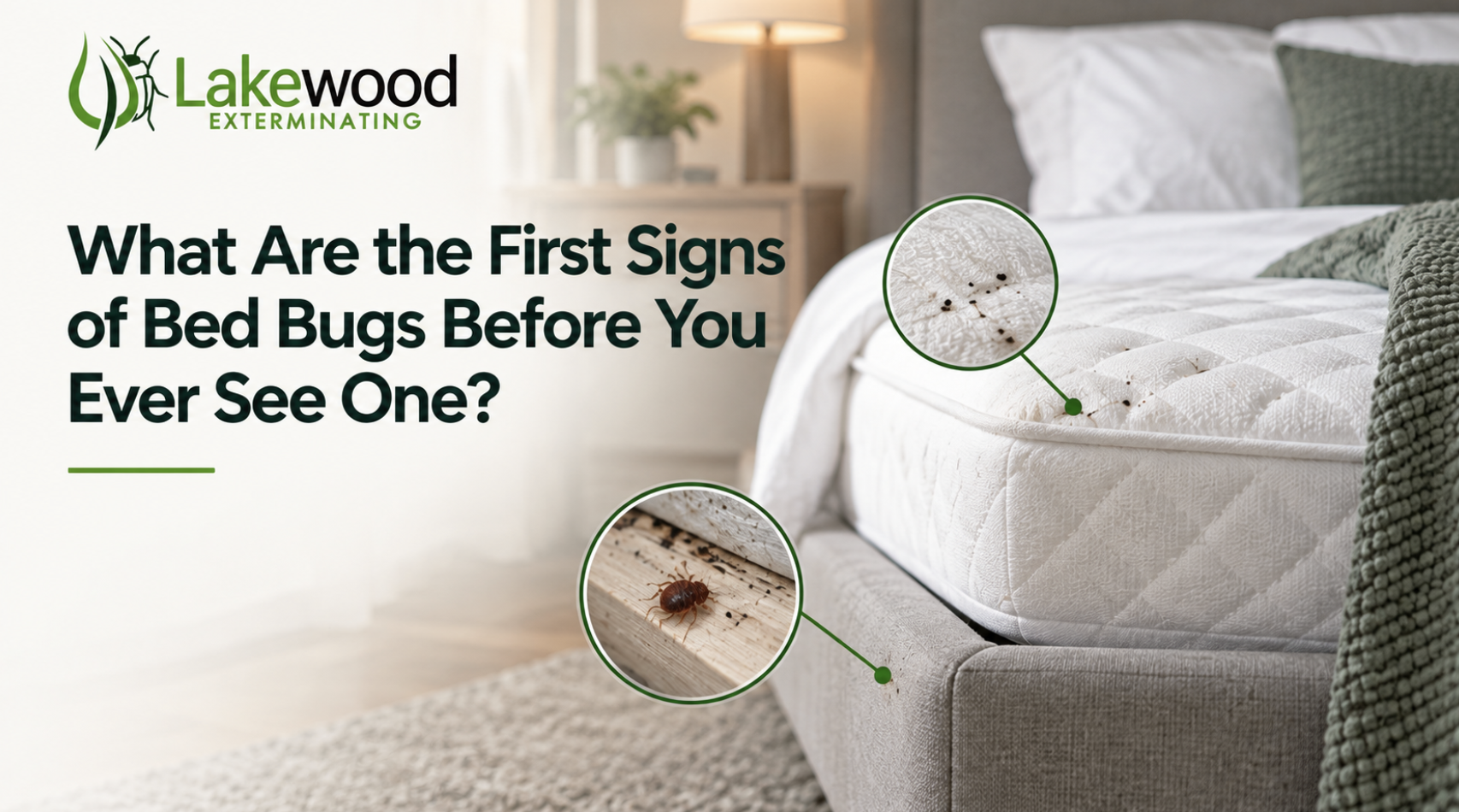
Photograph the welts and note where they are before they fade. Then check the bed. Look along mattress seams and box spring edges with a flashlight for small dark fecal spots, pale shed skins, and live bugs. If you find a bug, save it in a sealed Ziploc bag or take a video. Our technicians know the nooks, crannies, and quirks unique to West Side homes, and a live specimen gives them the answer right away.
When Should You Call A Pest Professional?
Call when welts keep showing up in bite patterns in a line or tight clusters you can’t explain. Waiting doesn’t help. A female bed bug lays 3 to 4 eggs a day, according to the Pest Management Operators Training Manual, so a small problem doesn’t stay small. Every night you wait gives them more time to settle into mattress seams, box springs, and upholstery.
How do you know if bites need professional treatment?
Itchy red welts that keep appearing after you’ve washed the bedding and vacuumed are a strong sign the source is still there. If bites come back in the same places night after night, or a second person in the house starts reacting, cleaning isn’t reaching the problem.
A delayed bite reaction makes this harder. Because symptoms can show up days after the bite, people often underestimate how long the bugs have been there before they call.
What should you expect from a professional visit?
Every bed bug job starts with an inspection. It confirms whether bed bugs are active, how heavy the infestation is, and which rooms are involved. You get a price quote and prep guidelines written for your home. The inspection is $75 plus tax for a single-family home.
- Fixed pricing: no commission-based salespeople pushing services you don’t need
- Treatment based on the inspection: focused on the beds, couches, and chairs where bed bugs actually live
- Follow-up built in: a follow-up inspection about two weeks after treatment, under a 60-day service agreement
We’re a four-person team, and I train every technician myself. If bites keep showing up and you can’t find the source, schedule an inspection.
FAQ
Why don’t bed bug bites hurt right away?
Bed bugs are so well adapted to feeding on people that their bites are nearly painless, and the itch doesn’t start right away. Most people notice the bites only after waking up.
How do flea bites differ from bed bug bites?
Flea bites land mostly on the feet, ankles, and lower legs. Bed bug bites show up on any skin exposed while you sleep and often form lines or clusters.
What makes mosquito and spider bites different from bed bug bites?
Mosquito bites swell and itch within minutes, and in Cleveland they come during mosquito season, May through mid-October. A black widow bite hurts immediately. A brown recluse bite forms a blister with a darkening center. Bed bug bites are painless at the time and show up as clustered welts in the morning.
Conclusion
Your skin gives you clues, not answers. Location, pattern, and timing can point you toward fleas, mosquitoes, spiders, or bed bugs, but reactions vary too much from person to person to be certain from bites alone. With bed bugs, the proof is in the mattress seams.
If the welts keep coming and you can’t find the cause, talk to Lakewood Exterminating at (216) 466-2486. We’ll find out what’s biting you.