Bed bugs spread between units by crawling through shared wall voids, plumbing chases, electrical outlets, and gaps around pipes and baseboards, and by riding on furniture and belongings moved through the building. Older Cleveland apartment buildings have dozens of these hidden pathways.
How Bed Bugs Spread Between Units: The Basics
Bed bugs can’t fly. They’re wingless, so they get around two ways: walking through any continuous opening, and hitching rides on furniture, bags, and clothing. Purdue University Extension notes that once bed bugs are established in a building, they move from room to room through cracks and openings in walls and ceilings. In a multi-unit building, one of those rooms is often your neighbor’s. For professional help with an infestation, Bed Bug Control in Cleveland can help identify and address the problem.
Why They Move at All
Bed bugs go where the people are. They hide as close to the host as they can. When the best hiding spots near a bed fill up, or when a treatment in one unit disturbs them, some move outward into the walls and toward the next available host.
That second trigger is the one that turns one tenant’s problem into a building problem. A treatment applied to one unit, with nothing done next door, leaves survivors a route to an untreated apartment. So the useful question isn’t why they won’t stay put. It’s which physical routes connect your unit to the ones around it.
How Far and How Fast
Crawling through walls is the slow route. The fast route is hitchhiking. Purdue points out that bed bugs become a problem wherever tenant turnover is constant or used beds and couches get moved between apartments. One bug riding a secondhand couch or a mattress carried down the hall can start a new infestation in a distant unit the same day.
Then the numbers take over. A female bed bug lays 3 to 4 eggs a day and up to around 500 in her lifetime, according to the Pest Management Operators Training Manual. This is why catching the signs of bed bugs early matters so much in multi-family buildings.
Why Older Cleveland Apartment Buildings Are High-Risk
A lot of the West Side’s rental stock in Lakewood, Ohio City, Edgewater, and Old Brooklyn is pre-war construction. Those buildings share features bed bugs take advantage of: plaster-and-lath walls that crack at the seams as the building settles, balloon framing with gaps in the fire-stops that leave open cavities between floors, and stacked utility risers that repeat the same pipe and wire penetrations in unit after unit.
Modern building codes require sealing penetrations between fire compartments. Buildings from the 1910s and 1920s went up long before those rules, so many of the cavities behind the walls are still open. Here’s why each feature matters.
| Construction feature | Why it is a risk | Bed bug access |
|---|---|---|
| Plaster-and-lath walls | Crack at seams as the building settles | Gaps above baseboards and at corners |
| Balloon framing, missing fire-stops | Open cavities run floor to floor | Vertical travel inside walls, unseen |
| Stacked utility risers | Same pipe and wire penetrations repeat in every unit | Ring gaps around pipes and conduit |
| Steam and hot-water radiators | Supply pipes pierce every floor | Dark, undisturbed hiding spots behind enclosures |
| Shared hallways and laundry | Tenants and belongings cross paths daily | Hitchhiking on furniture, bags, baskets |
Shared Wall Voids: The Main Highway Between Units
Behind the plaster of a shared wall is an open cavity. Bed bugs get in through cracks above baseboards, loose outlet trim, and gaps where the wall meets the floor. From there they travel up, down, and sideways inside the void without either tenant seeing them. Wall voids are the most common route in older buildings because the space is continuous. A bug that slips in behind a first-floor radiator can reach the unit above without ever crossing a hallway.
Sealing baseboard seams, caulking floor-wall joints, and repairing cracked plaster closes this route, and Purdue recommends caulking and sealing as many hiding cracks as possible. But sealing has to go with treatment, not replace it. Seal without treating, and you trap bugs behind the wall. They can wait there a long time. The General Pest Management manual notes that bed bugs can survive up to a year without feeding when no host is available.
Plumbing Chases: The Vertical Elevator
A plumbing chase is the shaft that carries supply lines, drains, and in older Cleveland buildings, steam or hot-water heating pipes between floors. Where each pipe passes through a floor or wall, the original seal is often a loose escutcheon plate, the decorative ring around the pipe, or nothing at all. Those open rings give bed bugs a straight path from one unit’s kitchen or bathroom wall into the unit above or below.
Radiators deserve a close look. Their supply lines pierce every floor, and the space behind a radiator or inside an enclosure stays dark and rarely gets cleaned. In pre-war buildings, radiator enclosures and the floor openings around their pipes are common places to find a spreading infestation.
Vacant units need attention too. The Operators Training Manual notes that below about 61°F, bed bugs slip into a semi-hibernation that lets them survive longer. An empty, cold apartment in a Cleveland winter isn’t clean just because nobody’s been bitten there lately.
Other Pathways: Outlets, Wiring, Baseboards, and Hallways
Electrical boxes and switch plates connect through the same studs as the wall voids, so a loose outlet cover on a shared wall is a doorway. Bed bugs also cross under poorly fitted entry doors, hide in door frames and thresholds along shared corridors, and ride on furniture moved through the halls. Shared laundry rooms add one more exchange point, since bags and baskets sit down right next to a neighbor’s load.
| Pathway between units | Risk level | Sealing fix |
|---|---|---|
| Shared wall voids | High | Caulk baseboard seams; repair cracked plaster |
| Plumbing chases | High | Seal pipe penetrations; secure escutcheon plates |
| Outlets and switch boxes | Medium | Gasketed outlet covers; tighten plates |
| Entry doors and hallways | Medium | Door sweeps; inspect anything moved through the halls |
| Secondhand furniture | Medium to high | Inspect every piece before it comes inside |
What an Adjacent Unit Inspection Involves
Because the routes are hidden, confirming that bed bugs have spread takes an adjacent unit inspection. When we find live bed bugs in a rental, we require inspections of the units directly above, below, on each side, and across the hall. Purdue adds that common areas, storage rooms, and offices in the building need inspection too if bugs are found.
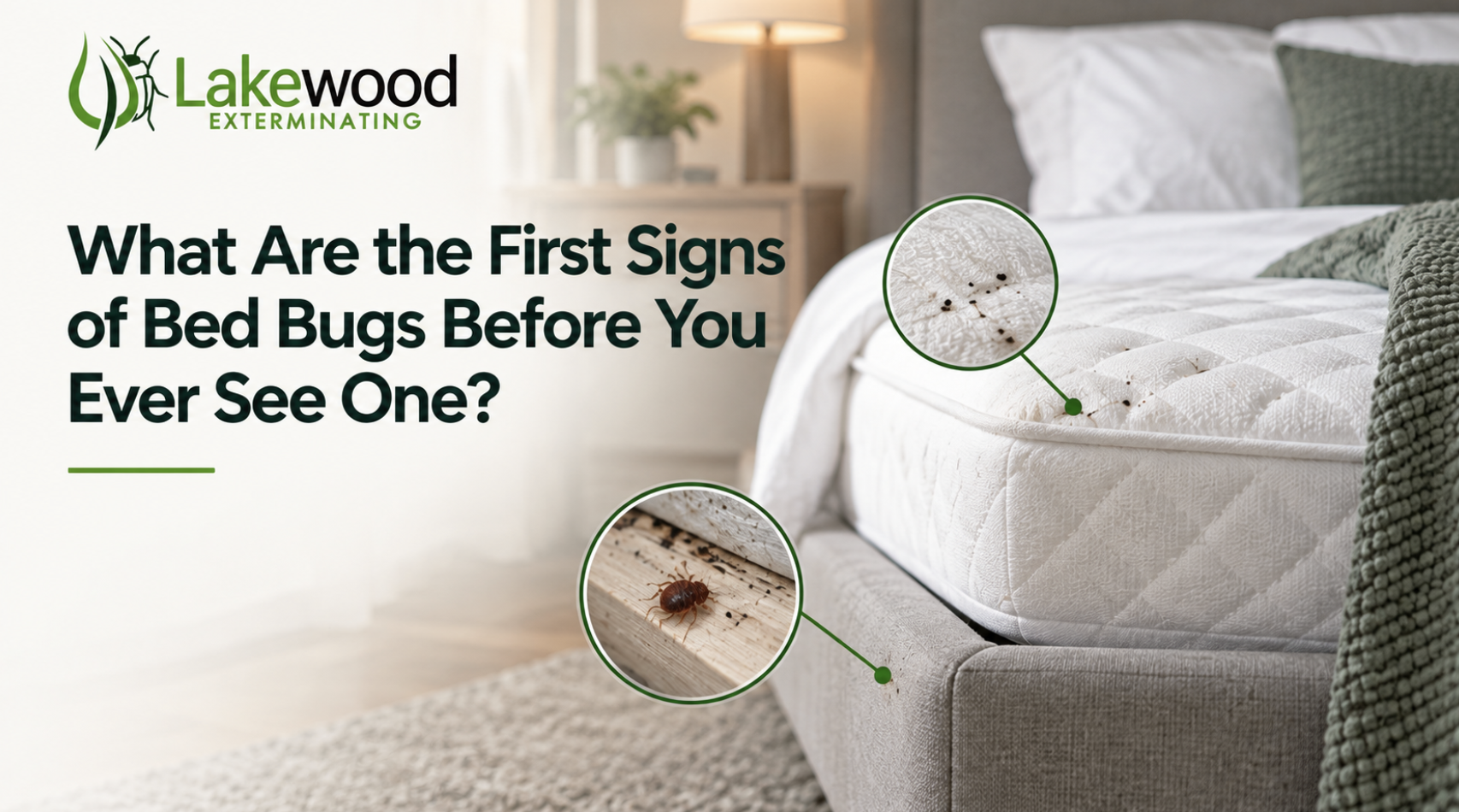
On a shared wall, we check the spots bugs move into as an infestation grows: electrical outlets, baseboard seams, ceiling-wall junctions, door and window frames, loose wallpaper, and the backs of wall hangings. In older buildings that also means pipe penetrations and the space behind radiators. We’re looking for fecal spotting, shed skins, eggs, and live insects along the same routes the bugs actually travel.
The landlord should schedule the inspection and coordinate access to every unit that needs one, and we can’t treat a rental without the landlord’s consent. Our inspection is $75 plus tax, with $50 for each additional unit. Tenants should report activity to the landlord in writing right away rather than treating on their own and pushing bugs outward. Once a visit is scheduled, follow a proper bed bug treatment prep checklist so your unit can be treated on the first appointment instead of rescheduled.
Why Treating One Unit Never Works
Every pathway above leads to the same conclusion: an infestation in a multi-unit building is a building problem. Treat one unit and leave the neighbors alone, and survivors in the walls have somewhere to go. They show up next door, or they come back once the product wears off.
Effective programs treat the infested unit and any affected neighbors together, then follow up to catch eggs. Sprays don’t kill newly laid eggs, and the General Pest Management manual puts hatching at one to two weeks, faster in warm conditions. Our program handles that with a follow-up inspection about two weeks after the initial treatment. If we find live bugs, we spot-treat those areas and inspect again two weeks later. Sealing the pathways comes after treatment, not before.
Some companies offer bed bug heat treatment for multiple connected units in one coordinated visit, which reaches every life stage at once. We don’t do heat treatment, but it’s a legitimate option for buildings with heavy spread.
| Treatment approach | What it kills | Re-infestation risk | Follow-ups | Best for |
|---|---|---|---|---|
| Single-unit chemical | Bugs in that unit | High; survivors reach untreated neighbors | Inspection about 2 weeks later | A confirmed, truly isolated unit |
| Coordinated multi-unit chemical | Bugs across connected units; residual catches hatching nymphs | Lower, especially with sealing | Inspection about 2 weeks later; spot treatment if live bugs | Most infestations in older multi-unit buildings |
| Multi-unit heat (not offered by Lakewood) | All life stages, including eggs, in one visit | Low when paired with sealing | Usually 1 verification visit | Heavy spread, fast turnaround |
How to Slow the Spread While You Wait for Treatment
There are practical steps you can take before we arrive. Leave infested furniture where it is. Moving a couch into the hallway spreads bugs faster than they could ever crawl. Bag loose belongings and keep them in the same room instead of moving them to another part of the apartment. If something has to go, wrap it in plastic, tape it shut, and follow Purdue’s advice to mark it “Do Not Salvage – Bed Bugs.” Never leave infested items in a hallway, lobby, or other common area.
Pull the bed away from the wall and keep sheets and blankets off the floor. Use a real bed bug-proof mattress encasement, not a plastic cover, since we remove plastic and torn covers during treatment. Wash bedding and clothes in hot water and dry them on high heat for at least 30 minutes. Skip the foggers. Purdue found they don’t reach the cracks where bed bugs hide and can start a fire near a pilot light, and we’ll need you to stop using your own products before we treat anyway.
Frequently Asked Questions
Can bed bugs travel through apartment walls?
Yes. Bed bugs are flat enough to squeeze through very thin cracks, and they move freely inside the open cavities of shared walls. In older plaster-and-lath buildings, cracks above baseboards and around outlets are usually enough for them to pass between units unnoticed.
How fast do bed bugs spread from one apartment to another?
Through walls and pipe chases, it happens gradually as the population grows. Through an infested couch, mattress, or laundry basket, it can happen the same day. Report activity quickly. With females laying several eggs a day, a small infestation doesn’t stay small for long.
Can I get bed bugs from my neighbor’s apartment?
Yes, if your units share walls, ceilings, floors, or plumbing. Bugs pass through unsealed openings in both directions. That’s why we inspect the units above, below, on each side, and across the hall from a confirmed infestation, not just the one where bugs were found. Some people don’t react to bites at all, so waiting for bites isn’t a reliable warning.
Who pays for bed bug treatment in a Cleveland apartment?
Often the landlord, but it depends on your lease and local housing code. Many local codes put the responsibility on the landlord, especially when bugs are moving between units. Report activity in writing and check your lease before paying out of pocket. If there’s a dispute, your local health department is the place to start.
How do I know if bed bugs came from a neighboring unit?
The strongest signal is activity that shows up first on a shared wall, near pipe penetrations, or behind outlets, instead of around your bed. An adjacent unit inspection can show where the heaviest activity is across the connected units, which usually points to where it started.
Does sealing outlets and baseboards actually stop bed bugs?
Sealing cuts off routes between units and belongs in any prevention plan, but it doesn’t eliminate an existing infestation. Sealing without treating can trap bugs inside the walls, where they can wait a long time for a meal. Seal after a coordinated treatment, not instead of one: gasketed outlet covers, caulked baseboard seams, and sealed pipe penetrations.
The Bottom Line
Bed bugs move between units through shared wall voids, plumbing chases, outlets, and shared hallways, and older Cleveland apartment buildings have more of those routes than almost any other kind of housing. One tenant’s spray can won’t fix it. What works is an inspection of the adjacent units, treatment of every affected unit with a follow-up timed to the egg hatch, and sealing the shared walls once the bugs are gone.
If you’ve seen signs of activity, get a Cleveland exterminator cost quote and ask for adjacent unit inspections before the infestation moves further. You can reach us at (216) 466-2486 or learn more about Lakewood Exterminating.